How to Avoid Plagiarism and Keep Your Writing Original and Credible
Have you ever turned in a piece of writing that you were proud of, only to fear afterward that you had drawn too much from your research? You’re not the only one. When there is so much information, one of the hardest things for writers to do is to be creative while still writing respectable, well-researched work.
It doesn’t have to be hard to keep your writing real. Originality and credibility are the two things that will help you create your reputation, whether you’re writing academic papers, press releases, making content for clients, or growing your brand through blog postings. This article explores practical tips to help you avoid plagiarism while maintaining your credibility, which is what keeps people coming back.
Why Originality and Trustworthiness Are Important
Anyone may take material from the internet and put it in their own words. What makes great writers different is that they can put together material, add their own unique insights, and convey ideas in new ways.
Being original isn’t only about not copying someone else’s work (though that’s really important). It’s about finding your voice, point of view, and way of looking at things. When you consistently provide your audience with new information, you earn their trust and become a thought leader rather than just another voice in the crowd. For writers and businesses that publish regularly, checking content for originality before it goes live can also help protect that trust. A plagiarism checker like GPTZero can help identify similarities with existing material that may otherwise be overlooked.
On the other side, you may gain credibility by backing up your statements with sound research and giving credit where credit is due. If your audience doesn’t trust you, it doesn’t matter how creative your concept is.
Common Mistakes That Hurt Originality
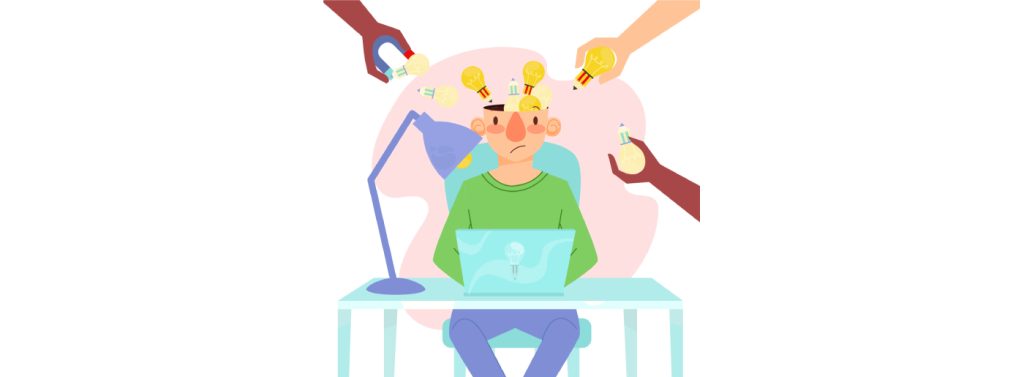
Before we talk about remedies, let’s look at where authors usually go wrong:
Patchwriting: It is when you modify a few words in a source but preserve the same sentence structure and flow. It feels like paraphrasing, but it’s really stealing someone else’s work.
Forgetting sources: You do a lot of research, take notes, and then weeks later you can’t recall which great idea was yours and which came from the article you read. Does this sound like anything you’ve heard before?
Too many quotes: Quotes may help your writing sound more authoritative, but if you use them too much, your writing might start to sound like a collection of other people’s work instead of your own.
Unintentional copying: Sometimes you know something so well that you really assume it’s your idea.
Guide to Avoid Plagiarism and Write Original
1. Make a research system that keeps you safe.
Begin with planning. As you do your study, establish a method that makes it easy to tell the difference between:
- Direct quotations, which should always be in quotation marks and have the source mentioned
- Ideas that have been reworded (with a source)
- Your own ideas and opinions
Pro Tip: Use different colors of highlights or tags in your note-taking tool. When it’s time to write and reference sources, you’ll be glad you did.
2. Learn how to really paraphrase
Changing words to their synonyms isn’t a real paraphrase. It’s about knowing something well enough to be able to describe it in your words, with your examples and sentence structure.
This is a workflow that works: Read the original material, shut the paper, wait a few minutes, and then write down what you learned in your own words with. This makes you think about the information instead of merely moving it around.
3. Use technology to keep you safe
Even the best writers may overlook things. That’s when a plagiarism checker becomes an important aspect of writing.
Plagiarism detection technologies today do more than simply find duplicated material. Even if you’ve paraphrased, they can assist you in finding parts that might be too similar to information that already exists. You can be sure that your writing is unique if you run it through a plagiarism checker before you turn it in.
Look for tools that provide you with precise reports that show you exactly where problems could be, so you can easily fix them and correctly reference sources you might have overlooked.
4. Include Your Own Point of View
This is when being original really stands out. After giving studied facts, ask yourself, “What do I think about this?”
- How does the subject relate to other things I’ve learned?
- What instances from my experience exemplify this point?
- What questions does this make you think of?
Your perspective is what makes research become new material and personalized.
5. Make citation a habit
Don’t wait till the conclusion to write citations. As you write, make sure to cite your sources. This stops you from having a great phrase or statistic in your draft and not remembering where it came from.
Different areas use different citation formats, such as APA, MLA, and Chicago, but the basic idea is the same: give credit where it’s due. If you’re not sure, reference it. It’s much better to cite too much than too little.
6. Give your work a break
Time is a tactic many writers forget. If you can, take at least a day’s break after finishing a draft. When you come back with new eyes, you’ll see parts that depend too much on sources or places where your voice gets lost, which can hinder the overall impact of your writing.
This distance also helps you figure out whether you’ve really put the material together or merely moved it around.
Establishing Credibility Over Time
Being original will help you avoid plagiarism, but building your reputation over time is what makes you credible. Here’s how to make both stronger:
- Be open about what you can’t do. Say you don’t know anything if you don’t. Readers value honesty more than fake knowledge.
- Keep your knowledge up to date. Fields change. Five years ago, what was true may not be true now. Check back on topics you’ve written about often to be sure your information is still correct.
- Take criticism seriously. When others ask you questions about your work, think about how to answer them. This shows that you are honest and makes you more credible.
- Get information from different places: When you only use one source or point of view, your credibility goes down. Look for diverse points of view and use them in your writing.
A List of Things to Check for in Your Writing
Before you press “publish” or “submit,” check this list:
- Have I checked my work for plagiarism?
- Do all of the quotes have the right formatting and attribution?
- Have I given credit for ideas that I have changed?
- Is it evident that my voice is different?
- Have I added any new ideas or points of view?
- Are the sources I’m using up-to-date and trustworthy?
- Would I be able to defend every claim I’ve made?
Going Forward with Confidence
It’s not about being flawless when it comes to keeping your uniqueness and credibility. It’s about creating habits and procedures that keep your work and reputation safe. Pick one or two tactics from this guide to get started and then add more.
Keep in mind that your point of view is important. The world doesn’t need more of the same old stuff. You need to avoid plagiarism and keep your work original and credible. It requires your voice, your thoughts, and your honest participation in the ideas.
Are you ready to improve the honesty of your writing? Make sure to check for plagiarism every time you write, come up with a citation system that works for you, and don’t forget how powerful your own ideas are.
As a writer, your credibility is your most important asset. Guard it with all your might.
Frequently Asked Questions
1. How much paraphrasing is too much for one piece?
There’s no set proportion, but most of your work should be your analysis and synthesis. If most of your paragraphs are merely a sentence or two of your comments on what you’ve read, you’ve gone too far in the direction of compilation. Try to find a balance where sources back up your ideas instead of becoming the ideas themselves. A decent rule of thumb is to include your own analysis, illustrations, or point of view for every idea you paraphrase.
2. Is it possible to plagiarize myself by utilizing things I’ve written before?
Yes, this is called self-plagiarism, and it can be an issue in some situations. If you wish to repurpose parts of an article you’ve already published in a new one, you should either cite the old work or make big changes to the material. This is especially true in school, where it is usually considered cheating to turn in the same paper for two distinct classes. If you’re not sure, tell your editors or teachers that you’re expanding on your prior work.
3. What should I do if a plagiarism checker says that what I authored is not original?
First, don’t freak out. Plagiarism checks can flag common words, technical terms, or coincidental similarities. Take a close look at the marked parts. You’re probably alright if it’s a frequent phrase or standard word in your profession. If the similarity is stronger, you might want to change the phrasing or include a citation if you think you could have taken from anything you read before. The tool is designed to help you find problems, not to blame you. Use it as a chance to learn and improve your writing.



Leave a Reply