How Agencies Turn One AI Avatar Video into Multiple Campaigns
Agencies can often produce one strong video without much difficulty. The challenge is adapting it when clients need different formats, offers, languages, and versions for multiple platforms. AI avatar technology makes it possible to reuse the same presenter across campaigns, but scaling production without a clear plan can lead to inconsistent messaging and repetitive content.
This workflow explains how agencies can turn one approved avatar concept into multiple campaign variations while maintaining control over the script, visual identity, review process, and performance data.
What Makes an AI Avatar Video Reusable Across Campaigns?
A reusable avatar video separates the stable brand elements from the message components that are allowed to change. The presenter, voice and visual rules stay controlled while hooks, benefits, offers and calls to action become modules.
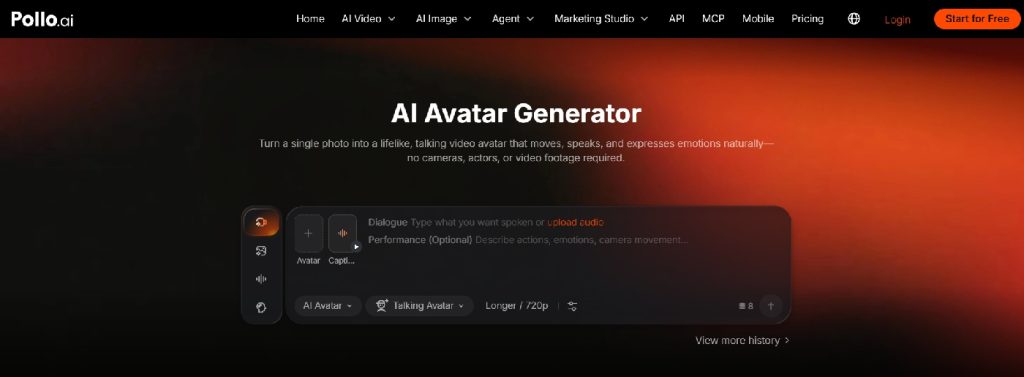
Agencies can scale AI avatar video production from one approved portrait when clients need recurring spokesperson content without scheduling a new shoot for every revision. Pollo AI says its Avatar workflow uses a photo, script or uploaded audio to create speech-led videos with synchronised expression and gestures. The operational value comes from building a system around that output, not from generating many loosely related clips.
How Do Agencies Turn One Avatar Video into Multiple Campaigns?
One approved avatar concept can support several campaign formats, as long as you adapt the message and presentation to each use case.
| Campaign format | What changes | Example |
| Social media ad | Hook and duration | A 15-second product introduction |
| Website landing page | More product details | A 45-second product explanation |
| Email campaign | Message and CTA | A short announcement with a clear next step |
| Retargeting ad | Offer and opening line | A reminder for users who visited the product page |
Build a verified master video first, then change one campaign layer at a time through a documented production sequence.
A practical agency workflow is:
- Create the client avatar guide. Record the approved portrait, voice, framing, background, pronunciation, gesture level and contexts where the avatar may appear. Before production, confirm that the client has permission to use the person’s image and voice for the intended campaigns, channels, territories and duration.
- Write a modular master script. Separate the hook, problem, benefit, proof, offer, and call to action so individual blocks can change without rewriting the entire message.
- Prepare the adaptation pass. Once the master performance is approved, identify which elements need to change for each campaign. Use AI video editing tools for adjustments such as background changes, visual clean-up, or removing distracting elements. Keep logos, legal text, prices, and final captions in a separate quality-control process.

- Produce one variable at a time. Create hook variants before changing the presenter, offer or visual style. This makes performance results easier to interpret. Agencies can also explore AI video ad tools that help generate creative variations, repurpose existing footage, and produce campaign assets for different advertising formats.
- Run client and compliance review. Approve the spoken claim, product appearance, disclosure and destination link for every campaign, even when most of the video is reused.

How to Optimize AI Avatar Videos for Different Platforms
A single AI avatar video may need several versions before it is ready for distribution. Agencies should adapt each version to the platform’s format, viewing habits, and campaign objective while keeping the core message and brand identity consistent.
Several elements may need adjustment:
- Aspect ratio: Prepare vertical 9:16 versions for platforms such as TikTok, Instagram Reels and YouTube Shorts, square 1:1 versions for suitable social feeds, and landscape 16:9 versions for websites, YouTube videos and presentations.
- Video duration: Match the length to the campaign objective. A short social ad may need to communicate one benefit quickly, while a landing-page video can provide more detailed product information.
- Captions and subtitles: Include readable captions for viewers who watch without sound. Check their timing, spelling and placement before publishing.
- Safe zones: Keep important text, subtitles, logos, and calls to action away from areas covered by platform buttons, navigation elements, and other interface controls.
- Opening hooks: Adapt the first few seconds to the audience and placement. A social media ad might begin with a question or a relatable problem, while a website video may introduce the product or service directly.
Creating platform-specific versions helps agencies use one approved video more effectively without making every campaign look identical.
How to Localize AI Avatar Campaigns for Global Audiences
When campaigns target audiences in different countries, agencies need to adapt more than the language. Localization should account for cultural expectations, regional terminology, pronunciation, and market-specific information.
Before producing a localized version, agencies should review several elements:
- Script adaptation: Translate the original message while preserving its meaning, tone and intended call to action. Adjust expressions and sentence structure rather than relying entirely on literal translation.
- Pronunciation and terminology: Check names, product terms, industry-specific vocabulary, and local expressions. The voice should sound natural to the intended audience.
- Cultural relevance: Review humor, examples, references, and visual details to make sure they are appropriate for the target market.
- Local offers and disclosures: Update prices, currencies, promotional dates, product availability and legal disclaimers for each region.
- Voice and lip-sync quality: Review the generated speech, pronunciation, timing, and lip synchronization in every language. A technically correct translation is not enough if the final presentation sounds unnatural.
A structured localization process allows agencies to adapt approved campaign concepts for new markets while maintaining consistent brand messaging.
Which AI Avatar Elements Can Agencies Reuse Safely?
Reuse approved identity and production rules, but recheck every message element that can change with the campaign or market. The distinction keeps efficiency from weakening accuracy.
| Element | Reuse across campaigns | Review every time |
| Avatar identity | Approved portrait and role | Consent scope and context |
| Voice | Tone and pronunciation guide | Language, pace and emotional direction |
| Visual system | Framing, colours and background rules | Offer, product and platform format |
| Script | Brand vocabulary and structure | Claims, proof and call to action |
| Finishing | Caption and export standards | Dates, prices, links and disclosures |
What Should Agencies Check Before Publishing an AI Avatar Video?
Before distributing campaign variations, agencies should complete a final quality-control review. Even when the original avatar and script have been approved, small changes to language, formatting, offers, or editing can introduce errors.
A pre-publication checklist can help teams catch these issues:
- Is the avatar’s appearance consistent with the approved reference?
- Does the voice sound natural and match the intended brand tone?
- Are product details, demonstrations and spoken claims accurate?
- Are subtitles correctly written and synchronized with the speech?
- Are prices, dates and promotional terms up to date?
- Are logos, colors and other brand elements displayed correctly?
- Are image, voice and usage permissions documented for the intended campaign?
- Does the final video meet the platform’s technical requirements?
Agencies should also keep a record of approved versions and any changes made during the review process. This makes it easier to identify the correct assets, avoid outdated content, and maintain accountability when several team members work on the same campaign.
How Do You Prevent Scaled Avatar Content from Feeling Repetitive?
Vary the audience problem, proof, and visual support rather than changing the avatar’s identity in every ad. Recognition is useful; repetition becomes a problem when every campaign makes the same argument.
Create a small library of approved openings, shot sizes, and supporting assets. One campaign can use the avatar as a concise product guide, another as an onboarding host, and another as a narrator between product clips. Change the background or gesture only when it supports the message. A different audience insight usually creates more meaningful variety than a random new style. AI video production is also making high-quality visual advertising more accessible to smaller businesses, allowing them to experiment with creative formats that might previously have required larger production budgets.
For example, the same approved avatar could introduce a product in a short social ad, explain its features in a longer landing-page video and guide new customers through an onboarding sequence. The presenter remains recognizable, while the message and format change to suit each audience.
What Should an Agency Measure Across Avatar Campaigns?
Agencies should track both production efficiency and audience response. Operational metrics can include the time from approved brief to first draft, the number of review rounds, the cost per accepted variation and the percentage of reusable assets. Campaign metrics can include video completion rates, click-through rates, qualified conversions, and negative feedback.
Tagging each variation by hook, avatar, offer, and platform makes it easier to identify which elements influence performance. This helps teams make informed creative decisions instead of assuming that faster AI production automatically leads to better results.
Why Should Agencies Test Different Hooks and Messages?
Producing multiple versions of an AI avatar video is most valuable when each variation serves a clear purpose. Instead of changing several creative elements at once, agencies can use controlled testing to learn which messages resonate with their target audiences.
For example, a team can keep the avatar, offer, and video format consistent while testing different opening hooks. One version might highlight a common customer problem, while another introduces a product benefit or asks a direct question.
Agencies can then compare audience retention, click-through rates, and conversions to identify which approach performs better. Once the team identifies a stronger hook, it can test other elements, such as the supporting message, visual assets, or call to action.
This approach turns reusable avatar content into a structured creative-testing process. Instead of producing variations simply to increase output, agencies can use campaign results to guide future video production.
What Are the Risks of Scaling AI Avatar Campaigns Too Quickly?
Although AI tools can make video production more efficient, generating many campaign variations without a clear process can create new problems. Agencies need to balance production speed with brand consistency, accuracy, and proper review.
Common mistakes include:
- Creating too many versions too early: Producing multiple variations before the master video has been approved can lead to unnecessary revisions and wasted production time.
- Using identical scripts for different audiences: Different customer groups may have different needs, questions and motivations. Reusing the same message everywhere can reduce campaign relevance.
- Losing brand consistency: Changes to the avatar’s appearance, voice, background or presentation style can make related campaigns feel disconnected.
- Publishing outdated information: Check prices, product details, promotional terms, and destination links for every variation.
- Overlooking usage permissions: Agencies should document the rights and consent needed to use a person’s likeness and voice across the intended formats, platforms, markets and campaign periods.
A reliable scaling process starts with an approved master video, clearly defined adaptation rules, and a consistent review procedure. Once these elements are established, agencies can expand production without sacrificing quality or control.
How to Start Scaling Client Avatar Content with Pollo AI
Start with one recurring client message and create an approved master video. Use Pollo AI Avatar to generate the initial presentation from a suitable portrait and script or audio recording.
Document the approved visual style, voice direction and script structure, then create two variations with different hooks for the same channel. Once the review and tracking processes are established, apply the workflow to additional offers, formats and markets.


Leave a Reply