Essential Digital Tools for Small Businesses to Generate More Leads
The best lead generation tools for small businesses help attract potential customers, capture their information, and turn initial interest into sales. From landing page builders and SEO platforms to CRM software and email marketing solutions, the right tools can help businesses build a more consistent customer acquisition process without hiring a large marketing team.
A customer visits your website, reads about your services, and leaves without making contact. Another requests a quote, but nobody follows up until the following week. How many sales opportunities disappear because your business lacks the right systems? A few well-chosen lead generation tools can help capture those opportunities before they slip away.
Landing Page Tools for Targeted Campaigns
Sending every potential customer to your homepage can weaken marketing campaigns. Dedicated landing pages let businesses match their message to a particular audience or offer.
A small accounting firm advertising tax preparation services could create a landing page specifically for new business owners. Visitors would see relevant information and a consultation request form instead of navigating through unrelated services.
The same approach works for other industries. A wedding photographer, for example, could create a dedicated landing page featuring recent projects, photography packages, client testimonials, and a short inquiry form. A professionally designed photographer website template can provide a starting point for showcasing a portfolio, explaining services, and collecting booking inquiries. This makes it easier for potential clients to evaluate the photographer’s work, understand the available packages, and submit an inquiry.
Effective landing page platforms should support mobile-friendly layouts, customizable forms, conversion tracking, and A/B testing. Experimenting with different headlines or form designs can reveal which combinations generate more inquiries.
Popular options include Unbounce and Leadpages. Unbounce offers a drag-and-drop landing page builder, customizable templates, lead capture forms, and campaign testing features. Leadpages combines landing page creation with conversion analytics and A/B testing, making it useful for businesses that want to experiment with different headlines, layouts, and calls to action.
SEO Tools That Attract Potential Customers
Search engine optimization helps companies connect with people already looking for their services. SEO tools can identify relevant search terms, uncover technical website problems, monitor search rankings, and identify opportunities for new content.
Google Search Console helps website owners understand how their pages perform in Google Search. Keyword research tools can also reveal questions potential customers frequently ask. Businesses looking to develop a more structured approach can also learn how to use local SEO tools for keyword research to identify relevant search terms and better understand local search intent.
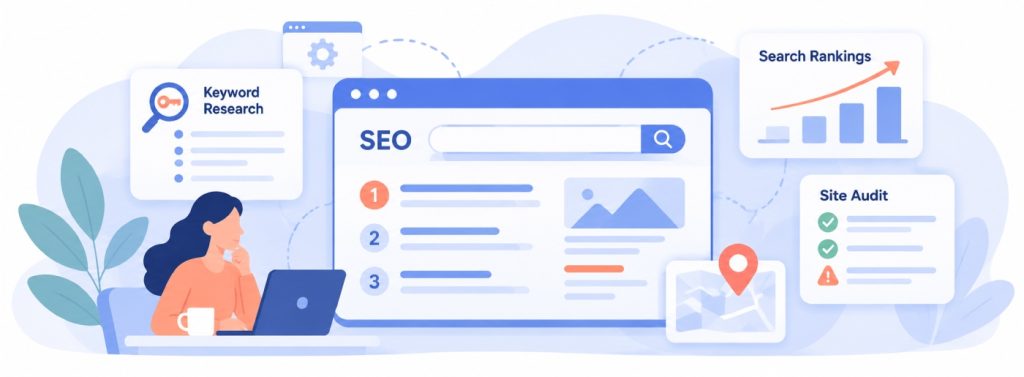
Other commonly used SEO platforms include Semrush and Ahrefs, which offer keyword research, competitor analysis, and website auditing features. These tools can help businesses identify relevant search opportunities, examine competing websites, and find areas where their own content or technical SEO needs improvement.
For better results, businesses should connect keyword research with the questions customers ask before making a purchase. A local plumbing company, for instance, might discover that people search for emergency pipe repairs more frequently than general plumbing services. Creating a dedicated page explaining emergency repair services, response times, and how to request assistance could attract visitors with immediate needs.
B2B Prospecting Tools for Finding Potential Buyers
Not every promising customer discovers a company through its website. Businesses selling products or services to other organizations often need to identify decision-makers and reach out directly.
B2B prospecting platforms help sales teams research companies and find professional contact information. Accurate, up-to-date contact data can reduce the time spent pursuing outdated leads and help sales teams focus on relevant prospects.
Platforms such as Apollo.io, Lusha, and LinkedIn Sales Navigator offer different approaches to B2B prospecting. Depending on the provider, businesses can research organizations, identify relevant decision-makers, explore professional profiles, and build targeted prospect lists. Comparing their data coverage and available features is particularly important when working within a limited sales budget.
However, contact databases vary in accuracy and industry coverage. Small businesses comparing Lusha competitors can evaluate providers based on their prospecting needs, budgets, available features, and compatibility with existing sales software.
A useful prospecting process starts with a clearly defined ideal customer profile. Industry, company size, location, and job role can help sales teams narrow their searches and avoid spending time contacting businesses that are unlikely to need their services.
Before purchasing a subscription, test the accuracy of contact records within your target market. A smaller database containing reliable information about suitable prospects may offer greater value than a large collection of irrelevant contacts.
CRM Tools for Managing and Converting Leads
Generating inquiries is only part of the process. Businesses also need a reliable way to organize contacts, track conversations, and make sure promising prospects receive timely follow-ups.
Customer relationship management (CRM) software brings contact information, communication history, and sales activities into one place. Small teams can use it to assign leads, schedule reminders, monitor opportunities, and keep track of customer interactions throughout the sales process.
Popular options include HubSpot CRM, Zoho CRM, and Pipedrive. These platforms offer contact management and sales pipeline features, while their automation, reporting, and integration capabilities vary by plan. Small businesses should compare them based on team size, budget, and the complexity of their sales process.
For example, a web design agency could use a CRM to record incoming website inquiries, note each prospect’s budget and project requirements, and schedule follow-ups after sending proposals. This reduces the risk of overlooking potential clients and gives the team a clearer picture of its sales pipeline.
Website Analytics Tools That Reveal Customer Behavior
Website traffic means little if visitors never contact your business. Analytics platforms help owners understand which marketing activities actually generate inquiries.
Google Analytics can track visitor activity and important website events when configured correctly. Businesses can use website analytics to examine traffic sources, landing page performance, completed contact forms, and customer journeys. Setting up conversion tracking also helps identify which channels generate valuable leads and which pages encourage visitors to take action.
Another useful option is Microsoft Clarity, which provides heatmaps and session recordings to help businesses understand how visitors interact with their websites. These insights can reveal confusing navigation, overlooked calls to action, and areas where visitors may abandon a page.
For example, an online retailer might receive plenty of visitors from social media but generate few purchases. Analytics can help identify where shoppers abandon the buying process, while heatmaps and session recordings can reveal potential usability problems.
Once businesses understand where their visitors come from and which pages generate inquiries, they can use email marketing to maintain those relationships and encourage prospects to take the next step.
Email Marketing Tools That Keep Prospects Engaged
Most potential customers won’t make a purchase immediately after discovering a business. Email marketing software helps companies maintain contact with interested prospects over time.
Popular platforms include Mailchimp and Brevo, which offer email campaign management, subscriber segmentation, and automation features. Their plans differ in contact limits, sending allowances, and available functionality, so businesses should choose a solution that matches their audience size and communication needs.
Businesses can create automated welcome messages and follow-up sequences based on subscriber interests. Segmentation also allows companies to send more relevant information rather than treating every contact identically.
As these processes become more advanced, businesses may also benefit from understanding the relationship between CRM and marketing automation software, particularly when coordinating customer data and automated campaigns.
For example, a fitness studio might send introductory class information to new subscribers and membership offers to people who have already attended a trial session.
Track meaningful outcomes such as website visits, completed registrations, and purchases instead of relying exclusively on email open rates. Clear unsubscribe options and permission-based mailing lists are also essential for responsible email marketing.
How to Choose the Right Lead Generation Tools
Buying multiple subscriptions won’t automatically produce better results. Small business owners should identify their biggest customer acquisition problems before adding software.
A company receiving plenty of inquiries but losing track of conversations may benefit most from CRM software. Another business struggling to attract visitors might prioritize website improvements and SEO tools.
When comparing digital marketing tools, look at their:
- Subscription costs
- Ease of use
- Integration with existing CRM, website, and email marketing platforms
- Reporting and analytics capabilities
- Potential to support future growth
Free trials can help employees assess everyday usability before committing to paid plans.
Pay particular attention to overlapping features. Paying for separate platforms that perform the same functions can quickly drain a limited marketing budget.
Build a Smarter Small Business Lead Generation Strategy
The right lead generation tools for small businesses can turn disconnected marketing activities into a more organized process for attracting, engaging, and converting potential customers. However, software alone won’t solve every lead generation problem. Businesses still need clear messaging, useful website content, reliable follow-up processes, and a good understanding of their target audience.
Start by identifying where potential customers are currently lost. If visitors leave without contacting you, review your landing pages and calls to action. If inquiries go unanswered, improve your lead management process. If website traffic is limited, prioritize SEO and content development.
Choose lead generation tools that address these specific challenges, work well together, and can grow alongside your business. Explore our blog for practical advice on website design, digital marketing, SEO, and building a stronger online presence.




Leave a Reply