Cloud Automation Helps Trade Contractors Reduce Scheduling Delays
Trade contractors are using cloud-based tools to improve job scheduling, coordinate field teams, and simplify daily operations.
Running a trade contracting business involves much more than completing jobs and keeping customers satisfied. Behind every successful project is a constant process of planning, communication, paperwork, and coordination.
Electricians, plumbers, builders, HVAC specialists, and other contractors need to ensure that the right people arrive at the right place with the right equipment at the right time.
In practice, schedules rarely go exactly as planned. Jobs take longer than expected, suppliers deliver materials late, and customers request last-minute changes. When these disruptions are managed through phone calls, spreadsheets, and scattered messages, even a minor adjustment can affect the whole day.
This is why many trade contracting businesses are turning to cloud automation. These tools help coordinate teams, manage appointments, and share real-time updates without requiring staff to manually revise schedules every time something changes.
How Office Staff and Field Technicians Work Together
One of the major benefits of cloud automation is that it brings the various parts of the business together. Scheduling, customer records, job statuses, and administrative tasks are closely connected, yet traditional workflows often manage them across separate systems or documents.
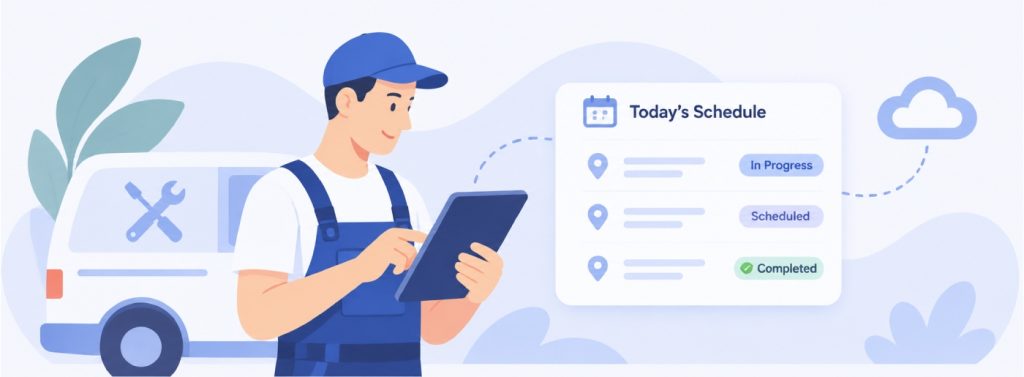
For instance, when a fitter completes a job, the office may want to know whether it was a success, whether any more materials are required, and whether a follow-up visit is required. If it’s all recorded digitally, then that information can be passed on to the people who do the invoicing, the people who deal with the customer, and the people who do the scheduling. Platforms like field service management software at OutOnSite are part of this wider trend towards connected field operations, with trade businesses looking at ways they can manage their jobs and coordinate their field teams via digital tools. The benefit of this approach isn’t just in saving a few minutes of admin.
Having reliable information available across the business makes it far easier to spot problems, deal with customers, and avoid all sorts of confusion.
Why Scheduling Becomes More Difficult as a Business Grows
For a small contracting business, scheduling is often handled by one person who takes customer calls, assigns jobs, checks technician availability, and communicates any changes. As the business grows, managing all these responsibilities becomes increasingly difficult.
A schedule that looks perfectly organized in the morning can quickly become outdated as the day progresses. One technician may finish a job earlier than expected, while another may be delayed by an unforeseen issue on-site. New customer jobs keep coming in, and someone has to work out where they slot in.
The issue is compounded still further if you have several teams operating in different locations. Without a common view of the schedule, the office staff won’t know where the technicians are or indeed how much work they can possibly take on.
These delays don’t just cause internal frustration. Customers can be left waiting for updates, appointments can be missed, and technicians can end up spending a lot of time traveling between jobs. Over time, poor scheduling will have an impact on customer satisfaction as well as on profitability.
One way to reduce these disruptions is to group appointments by location, match technicians to jobs based on their skills, and leave some flexibility for urgent requests. Scheduling should also account for travel time and the possibility that jobs may take longer than expected.
How Cloud Automation Improves Daily Operations
Centralizing Job Information
Cloud-based systems give contractors access to essential business information through a centralized digital platform. Instead of relying on separate spreadsheets or handwritten notes, office and field teams can access the same information, with updates shared across the platform.
Cloud-based CRM systems offer similar benefits by keeping customer information accessible and supporting collaboration among team members.
Simplifying Scheduling and Job Assignments
When a new job is created, relevant details can be recorded in one place, including customer contact information, the service address, job description, and preferred appointment time. Depending on the system, the job can be assigned to a technician based on their availability, location, and/or required skills.
This reduces the amount of manual coordination that would otherwise be involved in day-to-day scheduling. Instead of having to make a number of phone calls to check who’s available, staff can simply look at a shared calendar and make decisions based on the most up-to-date information.
Keeping Field Teams and Office Staff Connected
Technicians can update job statuses, report completed work, and notify the office if additional materials or follow-up visits are required. This helps office staff respond to changes, keep customers informed, and prepare invoices using up-to-date job information.
Of course, cloud automation won’t eliminate every scheduling problem. Equipment failures, staff shortages, and last-minute customer requests will always be part of the contracting industry. However, having shared schedules and timely updates makes it easier to respond to disruptions and coordinate the next steps.
Before choosing a cloud-based system, contractors should consider the size of their teams, the number of daily jobs, mobile access, scheduling features, and integration with existing accounting or customer management tools. The best solution is one that fits the company’s actual workflow rather than adding unnecessary complexity.
Businesses can assess the impact of these tools by monitoring a few basic indicators, such as jobs completed per technician, on-time arrivals, travel time between appointments, and the number of repeat visits. Tracking these figures over time helps identify where scheduling processes can be improved.
Ultimately, cloud automation helps trade contractors reduce administrative pressure, coordinate their teams more effectively, and keep daily operations running smoothly.



Leave a Reply