How to Turn a Pitch Deck into a Narrated Presentation Video
Some presentations are remarkably effective—until they’re shared without the presenter. A pitch deck that persuades investors during a live meeting can lose much of its impact when viewed later as a standalone file. Without the speaker’s explanations, transitions, and emphasis, even a well-designed presentation may leave readers with an incomplete understanding of the message.
This challenge extends far beyond fundraising. Sales presentations, product overviews, employee training materials, and client proposals often rely on the presenter to provide context that isn’t captured on the slides themselves. As more business communication happens asynchronously, companies increasingly need presentation formats that remain effective even when no one is there to explain them.
One solution is to turn traditional slide decks into narrated presentation videos. By combining visuals with voiceover, businesses can preserve context, improve clarity, and make presentations easier to share with clients, prospects, employees, and partners—regardless of when or where they’re viewed.
In this article, we’ll explore why traditional presentations often lose effectiveness once they’re shared, how narrated videos help solve that problem, and where they can add the greatest value for modern businesses.
Why Decks Fall Flat when They Travel
A slide is a prompt, not an explanation. When you present, your voice carries the argument, the emphasis, and the transitions between points. Email the same file and the recipient gets the prompts without the substance, so they skim, half-understand, and move on. Recording a narrated version for every deck has always been a separate production job, so teams make one polished video for the flagship pitch, if that, and every other deck ships silent.
| Traditional Presentation | Narrated Presentation Video |
| Requires a live presenter | Can be watched independently |
| Limited context | Includes voice explanations |
| Often misunderstood when shared | Easier to understand remotely |
| Difficult to reuse across audiences | Can be adapted for different viewers |
| Static slides | More engaging multimedia experience |
Turning a Deck into a Narrated Video

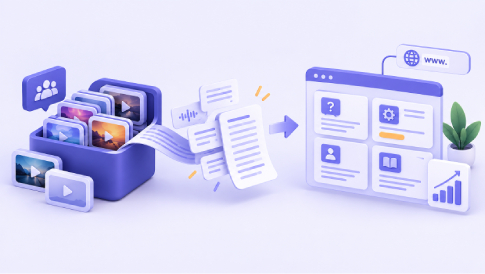
Recent AI-powered tools have made it much easier to convert traditional slide decks into narrated presentation videos without starting from scratch. You bring the presentation, and the software drafts the narration and the on-screen flow.
A tool that does PowerPoint to video conversion, like Leadde, works this way. You upload the presentation, a PDF, or pasted text, and it drafts an outline, builds the on-screen scenes, and generates the voiceover. You set the narrative style, choose the level of detail, and name the audience, so a video for an investor reads differently from one for a new customer. Because the input is the deck you already built, producing the narrated version takes minutes rather than a shoot.
Support for 88 languages and 175 dialects matters if your deck travels across markets: the same narrated presentation can be reissued in another language by translating the finished video rather than re-recording it.
Where it Fits in Business
Narrated presentation videos support a wide range of business scenarios. A founder turns the pitch deck into a narrated video a prospect can watch on their own time and still get the full argument. A sales team converts a product overview into a self-running explainer reps send after a call. A trainer makes a slide-based module watchable so it teaches without a live session. A marketer localizes a narrated deck for a regional audience without a voice actor. In each case the deck already existed; the tool gave it the voice it only had in the room.
How Narrated Presentations Support Business Websites
Many businesses publish product presentations, company overviews, and downloadable brochures on their websites. Embedding narrated presentation videos alongside these resources gives visitors another way to explore products and services without scheduling a meeting. Video presentations can also improve product demonstrations, onboarding, and customer education while making complex information easier to understand. They also help visitors better understand complex products or services before contacting the business.
Where it Falls Short
Narrated presentations also have limitations that businesses should consider. AI-generated presenters continue to improve, but in many situations they can still sound less natural than a live speaker, particularly for high-stakes presentations. A narrated video carries the argument; dense financial tables or detailed appendices still belong in the document people can study. And the output only reflects the input: a deck that was confusing on its own produces a confusing video, so the clarity of your actual argument still does the real work. The narration fills the gap the presenter left; it does not fix a weak slide. Before turning a deck into a narrated video, it’s worth reviewing a few presentation slide design best practices to ensure your visuals communicate ideas clearly and support the narration.
Best Practices for Creating Narrated Presentations
Creating a narrated presentation involves more than adding voiceover to existing slides. Following a few simple practices can make the final result more engaging and easier for viewers to follow.
- Keep slides simple and uncluttered.
- Focus each slide on one key idea.
- Use conversational narration instead of reading slide text.
- Review AI-generated voiceovers before sharing.
- End with a clear next step or call to action.
Start with Your Most Important Presentation
Narrated presentations won’t replace live conversations, but they can make business communication more effective when meetings aren’t possible. If your team regularly shares pitch decks, product presentations, or training materials by email, start by converting one of your most frequently used presentations into a narrated video and compare viewer engagement and feedback with the traditional slide deck. A small experiment can quickly show whether this format improves how your message is received.



Leave a Reply