Why Gamification LMS Tools Help Increase Course Completion Rates
Course completion rates reflect whether training retains attention long enough to produce usable knowledge. Strong material still loses people when each lesson feels detached, slow, or hard to measure. Gamification changes that experience by giving learners visible progress, immediate response, and meaningful short-term goals. With those cues in place, learners can see clearer reasons to continue, return to unfinished activities, and stay engaged throughout a longer course.
Motivation Works
Training leaders usually assess engagement features when choosing a platform, particularly when they want to make progress visible and give learners opportunities to earn recognition. Reviews of gamification LMS options often show how points, badges, streaks, and ranked activities shape daily study habits. Those mechanics matter less as decoration than as behavioral prompts that keep attention active through long modules, repeated practice, and final assessments.
Progress Feels Visible
Clear navigation and a well-structured learning environment can reinforce this sense of progress, particularly when learners need to move between lessons, assessments, and supporting resources. An engaging education website can make those elements easier to organize and access. Clear signals reduce hesitation and make the next action easier to choose. That simple clarity supports persistence because people are more likely to continue when their effort produces visible progress along a defined training path.
Competition Adds Energy
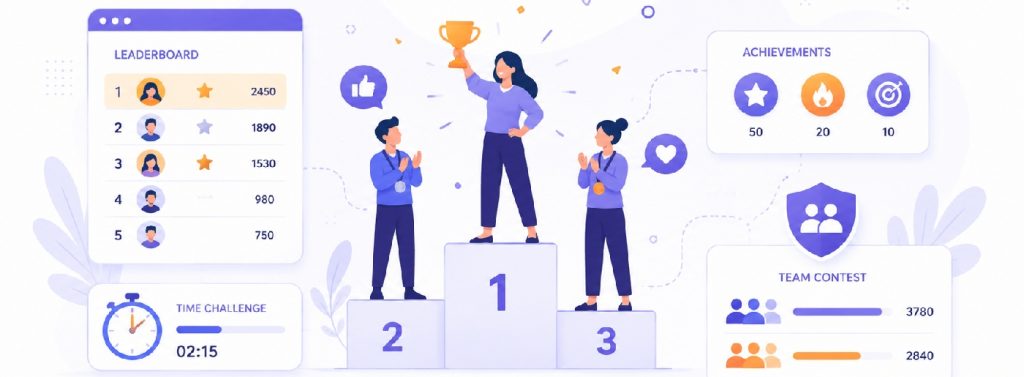
Friendly competition can encourage persistence when it remains constructive and appropriate for the audience. Leaderboards, timed tasks, and team contests create a reason to return, improve, and compare results without turning training into pressure. Careful design matters here. If rankings feel punishing, disengagement follows quickly. When the tone stays supportive, competitive features can add urgency and give learners another reason to remain engaged as they progress through the course.
Choice Supports Commitment
Learners may find it easier to stay engaged when they retain some control over pace and sequence. Gamified platforms often let learners choose missions, elective tasks, or the order of selected activities. That flexibility lowers resistance during busy periods and makes the program feel easier to rejoin after an interruption. A sense of agency supports commitment because learners feel guided rather than pushed through a fixed routine.
Short Wins Build Habits
Long courses often appear heavier than they are. Gamification breaks that weight into checkpoints, mini challenges, and daily targets that feel manageable from the first session. Each completed task creates a brief sense of closure, encouraging the next step. Repeated short wins can support habit formation, especially for learners who struggle with large modules that offer little feedback until the end.
Feedback Comes Faster
Slow feedback weakens attention and allows confusion to build. Gamified tools often respond to learners’ actions immediately through scores, status changes, achievement prompts, or level advancement. Rapid response helps people correct mistakes before frustration sets in. It also keeps training active rather than passive. That steady exchange between action and result can help learners stay oriented throughout the course and maintain momentum toward completion.
Social Signals Matter
Social visibility can also influence engagement when learners can share progress with peers. Shared goals, peer recognition, and group milestones create a light form of accountability without making learners feel exposed. Those signals can strengthen commitment because each step carries social meaning, even in self-paced training. Team acknowledgment also helps maintain energy after the early lessons, when private motivation alone may no longer be enough to sustain effort.
Relevance Improves Retention
Gamification LMS works best when each reward connects to useful skill development. Points without purpose lose value quickly, and learners recognize that gap. Effective systems tie challenges to job tasks, applied knowledge, and measurable performance. That link gives each activity practical weight. When game elements reflect real expectations, participants are more willing to continue because the training feels worth finishing rather than merely completing.
Data Reveals Friction
Completion rates improve more reliably when teams study where learners slow down or stop. Gamified systems often highlight abandoned modules, repeated errors, and common pause points through simple reporting. Those patterns help training managers adjust pacing, rewrite unclear sections, or change the timing of rewards. Better course decisions come from observed behavior, and that evidence can improve future completion without requiring a full content rebuild.
Mobile Access Extends Reach
Busy schedules often fragment learning into short gaps between daily responsibilities. Mobile-friendly gamified tools support that pattern by making it easy to resume progress from any location. A quick challenge, short quiz, or saved streak can preserve momentum outside scheduled sessions. When training fits real routines instead of competing with them, learners may find it easier to maintain progress and return to unfinished activities.
Designing a Website That Supports Gamified Learning
Gamification LMS tools do not exist separately from the learning environment. The website or learning platform needs to make progress easy to see, keep course materials organized, and provide a clear path between lessons, assessments, and other activities. A responsive education website can also make it easier for learners to continue their courses across desktop and mobile devices.
For schools, educators, and businesses offering online courses, education website templates can provide a practical starting point for organizing course information, instructor profiles, learning resources, and calls to action. Templates designed for online education can be adapted to different course structures and audiences, while a website builder allows teams to adjust pages and content as their programs evolve. For example, MotoCMS offers templates designed around online courses and distance learning, providing ready-made page structures that businesses and educators can customize for their own programs.
Conclusion
Gamification LMS tools can support course completion by giving learners clearer reasons to keep going once the initial burst of motivation wears off. Progress markers, quick feedback, practical rewards, and social cues turn training into a more active experience. Results are strongest when those elements support genuine learning goals rather than superficial entertainment. When that balance is present, gamification can help learners stay engaged, complete more of the material, and retain the knowledge the course is designed to teach.



Leave a Reply