Email vs SMS for Abandoned Cart Recovery in 2026: What Works Best?
Table of Contents
- Why Abandoned Cart Recovery Still Matters in 2026
- Email for Abandoned Cart Recovery
- SMS for Abandoned Cart Recovery
- Email vs SMS: Side-by-Side Comparison
- Combining Email + SMS: Best of Both Worlds
- Expert Tips for Cart Recovery in 2026
- Conclusion
In 2026, retailers face another rising challenge: cart abandonment. This revenue-draining problem pulls down every brand and marketer because there is the intent, but for some reason, shoppers do not push through. Some concerns arise, such as shipping costs, indecisiveness, distractions, and other options. As a result, they leave without purchase. This is the point where a great abandoned cart recovery strategy is a must.
With the goal to conquer this dilemma, two channels emerge to win back shoppers: email and Short Message Service (SMS). These options have the same objective and provide outstanding results because they have their respective strengths. But you must know which to opt for once you are in your abandoned cart recovery efforts.
In this article, we will dive into real-life case studies that will serve as benchmarks for future reference. This blog will give you abandoned cart strategies and share actionable cart abandonment email examples so that you will build a profound foundation in terms of high-converting SMS tactics and expert-based tips to increase your ROI.
Now, get your notes tool and absorb valuable insights that can help you attract and sustain your shoppers!
Why Abandoned Cart Recovery Still Matters in 2026
Even in 2026, shoppers still abandon their carts at staggering rates. Baymard Institute claims the average abandonment rate is as high as 70%, translating to billions lost in revenue every year.
From the perspective of device-level information, abandonment is at its very worst when it comes to mobile devices. Consumers at this stage encounter many distractions that cause friction when it comes to the checkout experience.
This makes abandoned cart recover strategies a must-have for eCommerce.
More than ever, with the heightened consumer expectations of personalization, speed, and convenience, brands need to follow up with customers. Cart abandonment creates an enormous financial loss for brands, as retailers’ CFOs reveal that it costs the retail industry more than $18 billion in revenue every year.
In addition to the lost revenue, it provides brands with lost opportunities to develop relationships with customers. This is why employing SMS marketing and email as retention channels continues to be successful, as these channels provide a meaningful, personalized, and measurable way to reconnect with reluctant shoppers at the right time.
Email for Abandoned Cart Recovery
Email has consistently been the workhorse of abandoned cart recover campaigns. The strength of email to deliver vivid imagery, persuasive copy, and the fact that it can be segmented with automation make it remain at the DNA of abandoned cart strategy programs.
Case Study 1: Island Olive Oil (Omnisend)
If you want to master segmentation, take a look at this example. Island Olive Oil designed a lifecycle automation flow with segmentation based on cart value and purchase behavior.
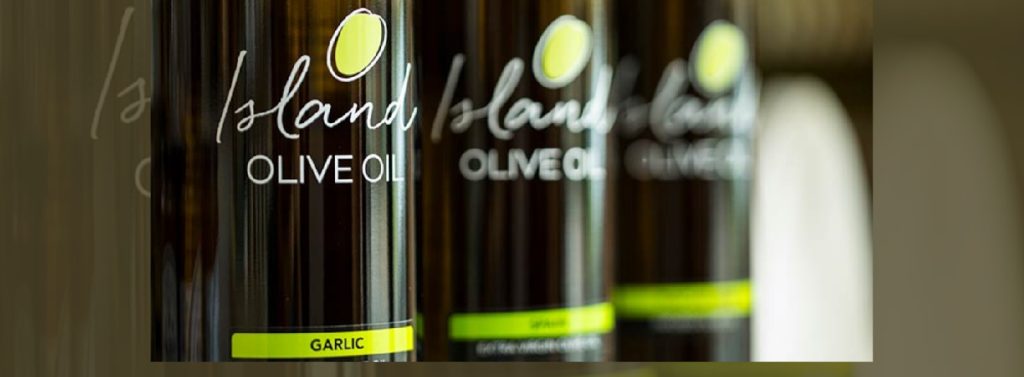
Its series of abandoned cart email flows achieved a 27% conversion rate, generating $11.24 for every email sent. The flow elements that contributed to this success were incentive messaging, free shipping, and limited discounts.
The overall abandoned cart recovery strategy included segmentation, personalized timing, and value proposition incentives.
Case Study 2: CleverTap
One of the most insightful cart abandonment email examples is Clever Tap’s case.
CleverTap shared two clients’ successes using behavior-triggered urgency emails, like “Your cart is almost gone!” and “This is your last chance!”

This approach achieved a 50% cart recovery rate by utilizing the gravity of the moment and scarcity messaging.
CleverTap’s strategy includes personalization and urgency-focused abandoned cart email subject lines timed within the first hour of cart abandonment.
Case Study 2: CleverTap
Here are some high-converting abandoned cart email examples:
- Reminder emails: simple and direct nudges for items left in the cart to notify consumers.

Example: Whisky Loot
- Shows how humor can enhance a simple reminder.
- Instead of sending a boring “You have left something behind,” they chose the subject line “Your cart is sobering up,” which is attention-grabbing in a fun way.
- The amusing copy adds a touch that makes the brand even more memorable, which helps improve the open and click-through rates.
- Efficiently performs its main function of bringing back shoppers to the checkout process—but in an entertaining manner.
- This balance between function and creativity demonstrates that even the simplest email reminder can lead to a significantly higher abandoned cart recovery rate.
- Discount and incentive emails: powerful in abandoned cart recovery, giving shoppers that final nudge to complete checkout.

Example: Headspace
- Uses a seasonal discount to inspire subscribers to take action without feeling pressured.
- Its subject line instantly communicates both the benefit and savings.
- Headspace tied the discount to New Year’s resolutions, making it feel relevant and supportive.
- The brands’ two contrasting buttons guided readers toward taking action seamlessly.
- Efficient tactic to mention the offer’s end date in the body, with a gentle scarcity note in the footer.
- Framed the discount as an investment in self-care rather than just a push to buy.
- Social proof emails: Word of mouth and reviews are the most effective persuaders, and social proof can provide the hesitant shopper with the final push to convert.

Example: Casper
- Plays into this with emotionally-driven copy, product reminders, and testimonials that eliminate doubts and finalize the sale.
- Creates a personal connection, reminding shoppers why they wanted the item in the first place.
- Visuals bring attention back to the exact product they “left,” rekindling intent.
- A bold, clear CTA button makes it easy to go back to checkout right on the spot.
- A customer testimonial provides solid social proof, taking away any potential second-guessing about quality and reaffirming credibility.
- Contact details and links to social accounts build transparency, making the brand feel approachable and trustworthy.
- Product recommendation follow-up: Remind shoppers of their abandoned items while suggesting complementary products to increase cart value.

Example: Chubbies
- Uses playful, on-brand content, product reminders, and low-key recommendations to remind shoppers of their carts.
- Casual, funny language showcases the brand personality.
- Abandoned cart graphics highlight the original item left behind, redirecting the customer’s attention and interest back to the items.
- There are multiple clickable links (the title, on the main image, and the CTA button); thus, the shopper can easily return to checkout.
- The brand personality of a quirky and engaging tone reinforces identity and ultimately leads to conversions.
- Abandoned cart email subject lines examples: Effective abandoned cart emails need simple subject lines and clear CTAs. Both elements must highlight the email’s intent and contribute towards the possibility of the consumer ultimately completing the sale.

Example: Dollar Shave Club
- Applies a helpful approach and a fun, approachable marketing strategy.
- The subject line is short, conversational, and curiosity-inducing, which are all effective elements of grabbing readers’ attention.
- It also aligns with the brand’s witty tone, which frames the email as an invitation rather than a sales pitch.
- The CTA utilizes a piece of bullet-pointed copy to outline the benefits of the products sold, thus guiding the viewers’ action.
- The email makes it clear what they are buying and how to click through.
- The combination of a memorable subject line and clear CTAs makes this abandoned cart email a very effective strategy that will generate engagement as well as conversions.
Additional Pro tip: Aside from succinct messages and clear abandoned cart email subject lines, using sharp visuals with your emails is also vital. You can explore customizable clean templates or layout product images with a transparent background to immediately direct consumers’ eyes. The support from comprehensible image attachments can improve your click-through rate and keep your shoppers interested in your product.
SMS for Abandoned Cart Recovery
An effective take on your abandoned cart recovery journey is SMS marketing. SMS messages have a normal open rate in over 90% of cases and average response times of less than three minutes. With this, SMS marketing services have a level of immediacy that is unsurpassed. For many big and starting brands, 2026 campaigns should include SMS to succeed.
Case Study 3: Joyride (via TxtCart)
One of the best-case studies in SMS marketing ROI 2026 is from Joyride, a brand that utilized mobile-first engagement.
Joyride was able to take advantage of TxtCart’s conversational SMS marketing platform to reclaim customers who left items in their cart. They combined automated reminders with two-way messaging that simulated human-to-human communication. It was a simple customer flow that provided shoppers the opportunity to come back and finish their decision.

This abandoned cart strategy generated over $1.8 million in revenue, with an astounding 12.4× ROI to win back 23,600+ orders, which highlights that conversational SMS can be competitive or better than email for recovering abandoned carts.
The focus was on conversational and frictionless engagement, using SMS marketing as an “abandoned cart recovery” strategy to quickly build trust and recover sales in real-time.
Case Study 4: Smania (via CartFox)
Here’s another impressive example of SMS marketing roi 2026 success:
Smania used CartFox’s SMS platform to connect with shoppers via urgency-based texts and timed offers, opportunistically reaching back out to those who had stopped at checkout.

This abandoned cart recover strategy, as part of their abandonment recovery service, ultimately produced amazing results—€2.67 million in recovered revenue with a phenomenal 6,405% ROI while also processing nearly 75,000 additional orders.
These results highlight just how important it is to use scarcity hooks and personal timing automation—which put urgency into each message—to drive a personable and impactful abandoned cart strategy using SMS.
Types of High-Converting Cart Recovery SMS Messages
- Time-based reminders: sent within 30 minutes.
- Discount/limited-time offers: “Your 15% discount expires in 1 hour.”
- Scarcity messages: “Only 3 left in stock.”
- Two-way interactions: conversational tone builds trust.
Important Remember: Character counts, and clarity is critical. That’s why you should always keep your SMS marketing services brief, clear, and actionable. For these kinds of campaigns, your texts and product photos should be optimized.
With this, many brands remove bg from images so they render cleanly on all devices without compromising CTA and other essential text messaging. This reminder will help you in your designing phase, so you will put everything together and draw back your consumers.
Email vs SMS: Side-by-Side Comparison
When it comes to abandoned cart recovery, 2026 will be the year when businesses can no longer rely on a single channel. Email marketing and SMS marketing have their own unique strengths, each addressing different shopper behavior and touch points in the buying journey. Recognizing both channels’ individual strengths helps business owners understand where they may want to apply resources or combine the two for optimal conversion.
| Feature | SMS | |
| Open Rates | Lower (42.35%) | Higher (98%) |
| Click Rates | Moderate (2–5%) | High (21-35%) |
| Personalization | High: Advanced segmentation and dynamic content possible | Moderate: Limited by character count and format |
| Cost | Lower: Generally more cost-effective per message | Higher: Costs can add up quickly, especially with high volumes |
| Best For | Visual content, storytelling, and detailed information | Urgency, immediacy, time-sensitive offers |
| Timing Window | Longer: Emails can be read at the recipient’s convenience | Immediate: Messages are typically read within minutes of receipt |
Combining Email + SMS: Best of Both Worlds
It is true that email is about developing the story and building a brand and cross-selling, while SMS marketing focuses on banking on immediacy to bring shoppers back to checkout. Yet, in 2026, the smartest abandoned cart strategies no longer ask, ‘Email or SMS?’—they win by using both in perfect sync.
The amount of reach and recapture rate can increase drastically by taking a fully integrated abandoned cart recoveryy approach. Thus, layering SMS reminders on top of highly tailored email campaigns will help you achieve more optimal abandoned cart recovery results and profit over the long term.
You can follow this 3-step sequence:
- Email reminder sent 1 hour after cart abandonment.
- An SMS nudge is sent 3 hours later, emphasizing urgency or incentive.
- Follow-up email within 24 hours for social proof/product recommendations.
It is true that email is about developing the story and building a brand and cross-selling, while SMS marketing focuses on banking on immediacy to bring shoppers back to checkout. Yet, in 2026, the smartest abandoned cart strategies no longer ask ‘email or SMS?’—they win by using both in perfect sync.
The amount of reach and recapture rate can increase drastically by taking a fully integrated abandoned cart recovery approach. Layering SMS reminders on top of highly tailored email campaigns will help you achieve more optimal abandoned cart recovery results and profit over the long term.
Expert Tips for Cart Recovery in 2026
Finding success in abandoned cart recovery, in 2026 and beyond, is 100 percent focused on data—not intuition. From timing to personalization, these tactics will ensure that your emails and SMS campaigns yield sales.
- Timing is key: The quicker you remind shoppers about their abandoned cart, the more likely they are to make their purchase. Your first abandoned cart email should go unfinished within one hour, while the shopper’s intent is still high. In today’s eCommerce world, timing is everything.
- Personalize, personalize, personalize: Don’t just send a generic “you left stuff behind” message. Use actual customer behavior and cart data, and show them the things they’d actually viewed and/or added. When you personalize the copy, it feels less like a template and more like a one-to-one reminder.
- A/B test incentives: What pushes your audience more: discounts, urgency-focused copy, or social proof? Test your incentives across segments to see if a price reduction, “stock almost out” notifications, or customer reviews are the most effective for retrieving abandoned carts.
- Avoid fatigue: Sending too many reminders can backfire. The optimal abandoned cart recover sequence persistently helps your customer recover their cart while respecting the space in their inbox. Over-messaging can lead to annoyed customers, cancellations, and the loss of the customer’s trust.
- Utilize automation: The leading SMS marketing services and email services use AI-powered triggers to predict exit intent or remind at just the right time. Services like Klaviyo, Omnisend, TxtCart, or background remover can also help you with crafting good visuals and more polished product images that make your checkout reminders pop and concise.
- Always link directly to checkout: Lower friction by removing unnecessary steps – A one-tap checkout link in your email or SMS will eliminate friction and allow for easy conversion.
Conclusion
Every abandoned cart is more than a missed sale—it’s a missed opportunity to engage. As a brand in 2026, you don’t have a reason to abandon carts anymore, with abandoned cart recovery tools being sharper than ever before. Email is still the primary way to tell the story; use rich visuals, segmentation, and recommendations to build loyalty with your customers. SMS is the instant medium, has 90%+ open rates, has response times under three minutes, and can bring the shopper back to checkout.
The smartest brands recognize the best of both worlds and now incorporate both into their abandoned cart recovery strategy. A layered abandoned cart strategy with personalized emails and timely SMS reminders can help create a one-two punch that embraces engagement and will convert abandoners to buyers.
If you own a Shopify store, the time is now! Put to the test bold abandoned cart email subject lines, rein in a well-grounded SMS marketing service, and beat down your abandoned cart recovery approach. Mastering both is not only about reclaiming lost sales; it will ultimately build trust, slowly and surely, cart by cart.
Feel free to check our article How to Sell More With Accurate, Formula-Based Pricing on Shopify to increase sales!


Leave a Reply