6 Loan Management Platforms for Banks, NBFCs & Fintechs in 2026
Banks, NBFCs, and fintech companies have different lending requirements, but they share a common need: reliable technology for managing loans efficiently across the lending lifecycle.
Modern loan management platforms can help automate loan servicing, payments, borrower communication, collections, reporting, underwriting, and portfolio monitoring. For growing lenders, the right platform can also make it easier to manage multiple loan products and integrate existing systems.
At the same time, lenders need a clear digital presence where borrowers can explore loan products, understand eligibility requirements, access support, and complete relevant online processes. The lending platform and the customer-facing website therefore need to work together as part of the broader digital experience.
With NBFC credit in India rising 14.4% year over year to ₹59.3 lakh crore in June 2026, according to RBI data reported by The Economic Times, scalable lending technology is becoming increasingly important for non-bank lenders.
Below are six loan management and lending platforms worth considering in 2026.
1. Bryt Software
Bryt Loan Management platform offers a cloud-based solution designed for different types of lenders, including banks, NBFIs, private lenders, commercial lenders, consumer lenders, mortgage lenders, and specialty lenders. Its platform brings loan servicing, payment tracking, borrower management, workflow automation, reporting, and portfolio visibility into one system.
Why Banks, NBFCs & Fintechs May Choose Bryt
Bryt is designed to support different lending models through centralized loan and borrower management, servicing workflows, payment tracking, and reporting. Its platform provides centralized loan and borrower information, automated servicing workflows, payment and delinquency tracking, borrower communication, and customizable loan products.
For NBFCs and other non-bank lenders, Bryt provides features such as customizable loan structures, multiple loan portfolios, automated payment collection, borrower communication, investor and lender management, asset tracking, reporting, and an open API.
For banks, Bryt offers loan management capabilities designed to handle higher loan volumes, improve data visibility, automate lending workflows, and provide access to loan documents and reporting from a centralized platform.
Suitable for: Banks, NBFCs/NBFIs, fintechs, private lenders, and specialty lenders looking for a flexible loan management platform.
2. nCino

nCino provides cloud-based banking and lending technology covering commercial, consumer, small-business, and mortgage lending.
Key Features
The nCino platform combines loan origination, underwriting, portfolio management, customer onboarding, workflow automation, and integrations. Its commercial lending solution supports processes from origination through underwriting and portfolio management, while its consumer lending platform supports secured and unsecured lending.
nCino also provides an Integration Gateway designed to connect core systems, credit bureaus, fintech platforms, and third-party applications.
Suitable for: Banks and financial institutions looking for an enterprise-oriented digital lending platform.
3. LendFoundry
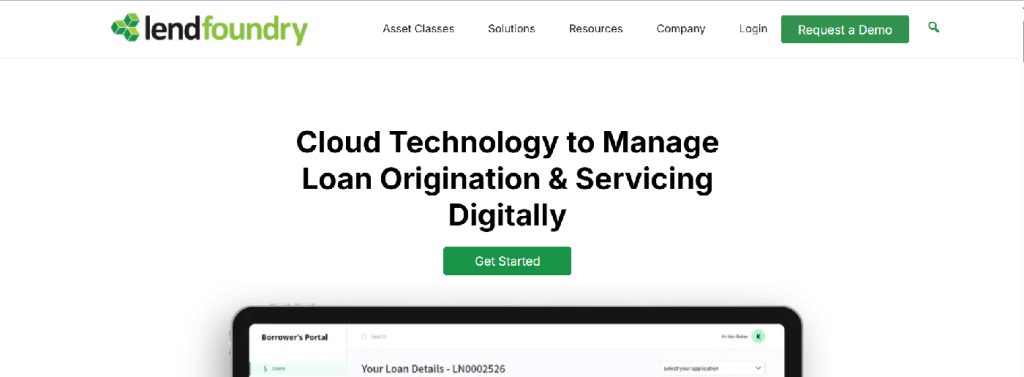
LendFoundry is an API-first, cloud-native lending platform designed for lenders that need configurable origination, underwriting, and servicing capabilities.
Key Features
Its platform supports different commercial lending products, including term loans, lines of credit, merchant cash advances, and SBA loans. It combines loan origination and servicing capabilities, including payment management, amortization schedules, loan modifications, and collections.
LendFoundry also positions its platform for banks, NBFCs, and fintech lenders, making it relevant for organizations that need to support multiple lending products while scaling their operations.
Suitable for: Banks, NBFCs, and fintech lenders seeking an API-driven and configurable lending platform.
4. Finastra Loan IQ

Finastra offers a broad portfolio of lending technology, with Loan IQ serving as its commercial loan servicing platform.
Key Features
Loan IQ supports the full lending lifecycle from origination to servicing and can handle bilateral, SME, commercial, syndicated, and other complex lending structures. Finastra also provides lending technology for non-bank financial institutions, including Simplified Servicing for high-volume bilateral and SME lending.
Its platform also supports integration with existing systems and fintech ecosystems, which can be important for financial institutions operating complex technology environments.
Suitable for: Large banks, commercial lenders, and financial institutions managing complex lending portfolios.
5. Abrigo

Abrigo provides lending and credit-risk technology primarily for banks and credit unions.
Key Features
Abrigo’s lending platform supports commercial, consumer, construction, agriculture, and small-business lending. Its technology combines loan origination, underwriting, credit risk management, workflow automation, and portfolio-related capabilities.
Its commercial lending software also includes relationship-management functionality, pipeline visibility, loan decisioning, document management, client portals, and workflow tools.
For consumer lending, Abrigo offers automated workflows, digital applications, document management, pipeline reporting, and decisioning capabilities.
Suitable for: Banks and credit unions that want lending, credit risk, and relationship-management capabilities in one ecosystem.
6. TurnKey Lender
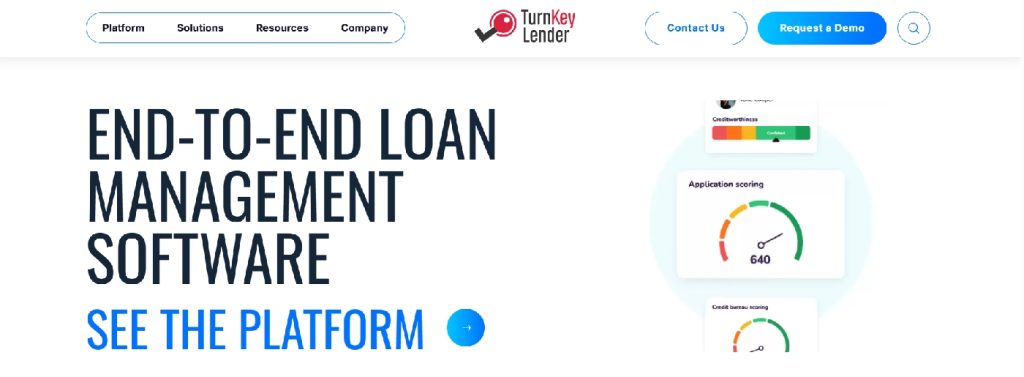
TurnKey Lender provides lending automation technology designed to cover multiple stages of the lending lifecycle.
Key Features
The platform is designed around lending workflows such as loan origination, underwriting, decisioning, servicing, and collections. Its configurable architecture can be used by different types of lenders and can connect with other business systems through integrations and APIs.
This makes it particularly relevant to fintech companies and lenders that need to create or customize digital lending workflows.
Suitable for: Fintech lenders and organizations looking for configurable lending automation.
Loan Management Platforms Compared
| Platform | Best suited for | Notable capabilities |
| Bryt Software | Banks, NBFCs, fintechs & specialty lenders | Loan management, servicing & workflow automation |
| nCino | Banks & financial institutions | Digital lending and banking workflows |
| LendFoundry | Banks, NBFCs & fintechs | API-first lending architecture |
| Finastra Loan IQ | Large banks & commercial lenders | Complex commercial loan servicing |
| Abrigo | Banks & credit unions | Lending and credit-risk management |
| TurnKey Lender | Fintechs & alternative lenders | Configurable lending automation |
How to Choose a Loan Management Platform
The best loan management platform depends on the institution’s lending model, loan volume, technology stack, and operational requirements.
1. Consider Your Lending Model
A bank managing commercial and consumer loans may need different capabilities from an NBFC specializing in equipment finance or a fintech offering short-term digital loans.
2. Look for End-to-End Functionality
Ideally, the platform should support more than basic loan tracking. Look for capabilities covering origination, servicing, payments, collections, borrower communication, reporting, and portfolio management.
3. Check Integration Capabilities
APIs and third-party integrations become increasingly important as lenders add credit bureaus, payment providers, CRMs, accounting systems, core banking platforms, and other fintech services.
4. Evaluate Automation
Automated payment processing, reminders, workflows, document generation, reporting, and collections can reduce repetitive manual work and improve operational consistency.
5. Consider Scalability
A platform should be capable of supporting increasing loan volumes and additional loan products without requiring lenders to completely replace their technology infrastructure.
6. Review Borrower Experience
Digital borrower portals, online payments, automated notifications, document access, and self-service functionality can make loan servicing more convenient for borrowers.
7. Evaluate Security and Compliance
Loan management platforms handle sensitive financial and borrower information, so lenders should also evaluate security controls, access management, auditability, data protection, and applicable regulatory requirements alongside features, integrations, and scalability.
Building a Strong Digital Presence for Lending Businesses
Loan management software handles much of the operational side of lending, but financial institutions also need a professional digital presence where potential borrowers can learn about products, compare options, and find support. A well-structured website can present loan products, eligibility information, FAQs, contact options, and educational resources in a clear format.
For smaller lenders and fintech companies, responsive website templates and website builders can provide a practical starting point for creating this customer-facing experience. A well-designed website can complement the underlying loan management system by giving borrowers a clear and accessible way to explore products, find information, and interact with the business.
Final Thoughts
The right loan management platform can help banks, NBFCs, and fintech companies reduce manual processes while improving visibility across their loan portfolios.
Bryt Software may be relevant to lenders looking for a flexible loan management and servicing platform that can support different lending models. Its capabilities span loan servicing, payment management, borrower communication, workflow automation, reporting, and configurable loan products.
Enterprise banks with complex commercial lending requirements may consider loan management platforms such as nCino or Finastra, while institutions focused heavily on credit-risk management may find Abrigo relevant. Lenders building technology-driven lending operations can also consider API-oriented platforms such as LendFoundry.
Ultimately, lenders should evaluate each platform based on loan volume, product complexity, automation requirements, integrations, compliance needs, scalability, and total cost of ownership rather than choosing loan management platforms solely on the number of features.





Leave a Reply