How to Scale and Meet Business Demands Through Cloud Architecture
The continuous digital transformations concerning efficiency, optimisation, and customer experience make the business ecosystem more competitive than ever. Businesses open to innovation have the opportunity to remain relevant, while others will become obsolete as they fail to offer products and services that meet demand and expectations.
For web developers, agencies, and businesses building modern websites, understanding cloud architecture has become essential. Whether you’re managing multiple client sites, developing complex web applications, or scaling your digital presence, the hosting and infrastructure decisions you make today will determine your platform’s performance tomorrow.
These transitions from one technology to another are necessary for companies to stay flexible, scale their operations, and ensure cost-effectiveness. One of the easiest ways to maintain these features is through cloud architecture, a pillar of modern business and development. It enables the creation of cloud computing environments where hardware components, virtual resources, and software interact through various designs.
Fortunately, companies can meet their needs by adopting various approaches to cloud architecture, enabling them to nurture innovation, accelerate transformation, or scale their business effectively. Here’s how the cloud can do this.

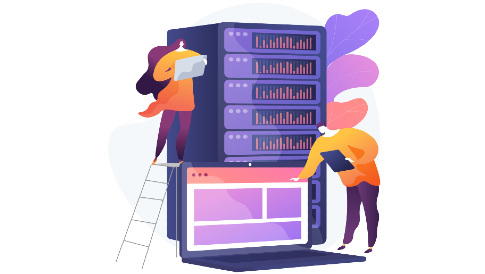
Image source: https://pixabay.com/illustrations/cloud-computing-computer-technology-8533106/
Cloud Architecture Manages Multiple Layers
The entire cloud platform operates through several technologies that blend together to complete the company’s offering. In other words, it includes the following:
- The hardware powering up the cloud.
- The virtual representation of the physical computing.
- The application and service coordinate the frontend user interface.
While the architecture employs a comprehensive approach, growing companies may have distinct needs that necessitate new infrastructure features. In this case, they can sign up for a cloud design analysis, during which experts will examine, among other features, the following:
- The high- and low-infrastructure design;
- The availability for disaster recovery.
- The investments needed for the Azure resources.
- The migration path towards the cloud solution needed.
The process takes approximately one week and concludes with a thorough report on optimizing the cloud architecture, advice on legal regulations, and support from Azure experts for software companies.
Modern and Emerging Cloud Architectures
SaaS companies and software-driven businesses may face challenges in cloud adoption, as they often view it as a one-size-fits-all solution. However, this is not an efficient strategy in navigating the financial costs, managing security, or reaching their objectives, which is why they must choose a relevant cloud system, such as one of the following:
- The public cloud architecture relies on the assistance of a third-party cloud service provider to ensure easy scaling.
- The organisation manages the private cloud architecture to control resources more efficiently.
- The hybrid cloud model utilizes both architectures, offering multiple advantages.
In addition to these common cloud architectures, a new approach known as multicloud has emerged. This system enables companies to utilize cloud services from multiple providers for added flexibility and tailored requests. Microsoft Azure, for example, is transforming multicloud management by simplifying the deployment process, with solutions like Intercept bridging migration, optimisation, and development in the Azure environment.
For businesses seeking practical guidance on efficiently implementing cloud solutions, this MotoCMS article on affordable cloud computing options for startups offers valuable insights into scalable and flexible infrastructure strategies.
Why Should Companies Expand Their Cloud Architecture?
Some of the main advantages of cloud architectures include independence from on-premises servers, physical storage, and networking infrastructures. But there are many other reasons for exploring cloud architectures:
- It helps accelerate the delivery of new apps.
- It can ensure compliance with regulations.
- It supports real-time scalability for business needs.
- It gives insight into IT spending patterns or cloud utilisation;
Of course, there are several practices companies must be wary of when developing their own cloud architecture, so they can make the most out of this innovation, such as up-front planning. The cloud addition must be introduced based on capacity and needs, and it must be continuously tested for peak performance.
Another important issue is security, for which the company needs data encryption, patch management, as well as rigid policies to protect the cloud architecture from hackers or unauthorised access. Some of these strategies include a zero-trust security model.
Finally, disaster recovery is non-negotiable, as the effects of downtime are among the most damaging to an organisation. A fast recovery following service disruptions can be addressed through monitoring capacity or redundant networks.
What Are the Prominent Challenges in Cloud Migration?
For those considering migrating to the cloud, this is one of the best adoption strategies for the company’s upscaling. Still, the process might include several hurdles, as it’s still quite complex and requires specialised planning and execution to navigate:
- The infrastructure compatibility level between the applications and the targeted cloud. Unfortunately, some third-party software solutions or applications weren’t designed for cloud computing, which can present issues with compatibility.
- The compliance concerns over sensitive data exposure. Migrating to the cloud involves a transition that necessitates strict security standards to prevent data breaches or cloud compliance risks.
- The integration issues that can influence data quality or business operations. Errors or inconsistencies in migration can trigger data corruption or security vulnerabilities that will eventually lead to flawed decision-making.
And there are only a few of the possible challenges businesses might encounter on their way to cloud architectures. Of course, there are solutions to counteract them, such as evaluating the current infrastructure, conducting frequent security audits, and implementing a robust error handling strategy, all with the help of specialised agencies.
What Is the Future of Cloud Architecture?
Considering the high competitiveness global companies experience, some are still migrating to the cloud, while others are implementing emerging trends that will take their business to the next level, such as the following:
- AI-driven security operations that will enhance threat detection and vulnerability management. For example, predictive analytics utilizes machine learning technologies to forecast potential vulnerabilities based on patterns in network traffic.
- Edge computing utilises AI models in consumer devices to enable low-latency features. However, the training of these AI models happens without transferring sensitive data, which ensures privacy while supporting collaboration.
- Blockchain and decentralized models can ensure top-notch transparency and integrity through decentralized identity management (DID), immutable audit trails, and smart contracts for governance.
- Quantum computing may take some time to implement, but it will revolutionize cloud computing through solutions like post-quantum cryptography for mitigating risks, quantum key distribution (QKD) for tamper-evident transmissions, or migration strategies based on quantum-safe security measures.
Businesses should consider preparing for the future of cloud by investing in AI tools and securing these systems. In addition, preparing now for quantum-safe encryption methods will ensure benefits for building an innovative cloud infrastructure.
Final Considerations
Meeting businesses’ demands in this fast-paced world proves challenging even for the most evolved companies. For example, some still struggle with cloud management, which is why approaching the right infrastructure is ideal for proper scaling. This includes the right cloud design based on future plans, as well as navigating risks and compliance. Moreover, being prepared for coming trends, such as decentralization or quantum computing, can ensure long-term success.




Leave a Reply