How AI Avatar Video Generators Are Rewriting the Rules of Engagement
We are living in a “video-first” universe. Open any social app—TikTok, LinkedIn, Instagram—and static images are increasingly rare, drowned out by a tsunami of moving pixels. For marketers and businesses, this shift presents a massive logistical headache: the “Content Crisis.”
Filming is expensive. It requires cameras, lighting, studios, actors, and endless hours of editing. But what if you could bypass the physical constraints of reality? What if your best spokesperson wasn’t born, but coded?
Welcome to the era of the AI Avatar Video Generator. This technology is not just a novelty; it is rapidly becoming the backbone of modern digital communication, fundamentally changing how we create, consume, and interact with video content.
Beyond Science Fiction: The State of Synthetic Media
A few years ago, computer-generated voices sounded like robots with a cold, and digital avatars looked like characters from a low-budget 1990s video game. Today, the landscape has shifted dramatically.
Driven by advancements in Generative Adversarial Networks (GANs) and Neural Radiance Fields (NeRFs), modern AI tools can create photorealistic digital humans that blink, breathe, and emote with startling accuracy.
The market reflects this explosion. According to a recent report by Allied Market Research, the global digital human avatar market is projected to reach $527 billion by 2030. This isn’t just about entertainment; it is about efficiency. We have moved from “assisted creation” (where software helps you edit) to “generative creation” (where software creates for you).
The Utility of the Virtual: Real-World Applications
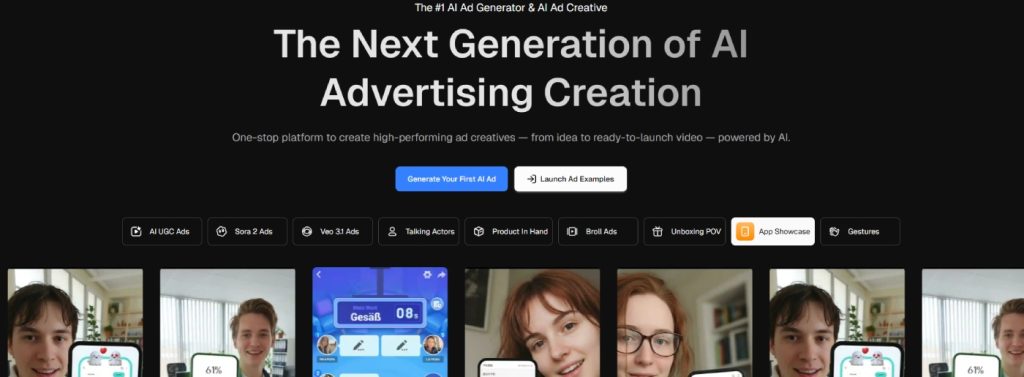
Why are brands rushing to adopt virtual humans? The answer lies in scalability and personalization. Here is how AI Avatar Video Generator technology is being deployed across industries:
1. Corporate Training and L&D (Learning & Development)
This is the “killer app” for avatars. Traditionally, if a company updated its compliance policy, it had to re-hire a film crew and an actor to re-shoot the training module.
The AI Fix: With AI avatars, HR managers simply update the text script, and the avatar generates a new video in minutes.
- Case in Point: A Fortune 500 logistics company reportedly cut their training video production costs by 80% by switching from live-action crews to synthetic media platforms like Synthesia or HeyGen.
2. Globalized Marketing (The Language Barrier Breaker)
Imagine recording a commercial once and instantly having the actor speak fluent Japanese, Spanish, and German—with perfect lip synchronization.
The AI Fix: AI video tools now offer “video translation” that goes beyond subtitles. They alter the pixel movements of the avatar’s mouth to match the new language. This allows brands to enter international markets at a fraction of the cost.
3. The 24/7 Newsroom and Customer Service
Media outlets and customer support centers are using avatars to deliver breaking news or answer FAQs around the clock, ensuring that “face-to-face” interaction is available even when human staff are asleep.
The Engine Under the Hood: How AI Powers the Workflow
The true magic of AI in short video production isn’t just the visual avatar; it is the comprehensive ecosystem that surrounds it. AI is removing the friction from every step of the creative process.
From Script to Screen in Seconds
The workflow has collapsed. Previously, you needed a scriptwriter, a storyboard artist, and a director. Now, Large Language Models (LLMs) like GPT-4 act as the writer, while the AI Avatar Video Generator acts as the director and actor combined.
Intelligent Asset Assembly
It’s not just about the talking head; it’s about the context. The most advanced tools today don’t just generate a face; they generate the entire commercial structure.
Take, for instance, the innovative approach of platforms like Nextify.ai. While not a traditional avatar host, it represents the pinnacle of generative video logic, creating high-converting video ads by analyzing product data and assembling narratives automatically. By integrating such efficiency-driven tools with avatar technology, marketers can create a “hybrid workflow”: using Nextify to build the persuasive structure and visual pacing of an ad, and inserting a hyper-realistic AI avatar to deliver the hook. This combination of structural automation and synthetic presence is the future of high-volume content creation.
Case Studies: The Tools Transforming the Trade
To understand the impact, we must look at the tools leading the charge.
- HeyGen: Known for its “Instant Avatar” feature, HeyGen allows users to upload a 2-minute video of themselves to create a digital twin.
- Real-World Impact: Real estate agents are using this to send personalized “video emails” to hundreds of clients simultaneously, addressing each by name without recording hundreds of clips.
- Synthesia: A pioneer in the corporate space, widely used for formal presentations.
- Data Point: Companies using Synthesia report reducing video production time from weeks to an average of 15 minutes per video.
- D-ID: Specializes in animating static photos. This is popular in the “faceless” YouTube niche, where creators bring historical figures to life to narrate documentaries.
Navigating the Uncanny Valley: What to Watch Out For
Despite the excitement, the road to virtualization has speed bumps. As we embrace AI Avatar Video Generator tools, creators must remain vigilant.
1. The “Uncanny Valley” Effect
If an avatar looks 99% human but moves slightly awkwardly, it creates a feeling of revulsion in the viewer. This is the “Uncanny Valley.”
- Advice: When using these tools, avoid extreme close-ups on the mouth. Use dynamic backgrounds, b-roll, and text overlays to keep the viewer’s eye moving.
2. The Authenticity Deficit
audiences crave connection. A purely robotic delivery can hurt brand trust.
- Strategy: Use AI avatars for informational content (how-to guides, updates, facts). For emotional storytelling (brand mission, apologies), a real human is still superior.
3. Platform Detection
Algorithms on platforms like TikTok and YouTube are getting smarter at detecting AI-generated content.
- Trend: Platforms are beginning to require labels for AI content. Transparency is key. Don’t try to fool your audience into thinking the avatar is real; embrace the tech as a stylistic choice.
The Horizon: Future Trends in Virtual Video
We are currently in the “Model T” era of AI video. What comes next will be faster, smarter, and more interactive.
- Interactive Avatars: Soon, videos won’t be linear. You will be able to speak to the avatar in the video, and it will respond in real-time, powered by an underlying LLM. Imagine a customer service video where you can interrupt the avatar to ask a specific question.
- Hyper-Personalization: We will move from “segmentation” to “individuation.” An e-commerce brand will generate a unique video for you specifically, where the avatar wears the clothes you left in your cart and addresses you by name.
- No-Code Cinematic Universes: We are approaching a point where text-to-video tools will generate not just a talking head, but full-body movement in complex 3D environments, eliminating the need for stock footage entirely.
Final Thoughts
The integration of AI into video production is an industrial revolution for the creative class. It is dismantling the financial and technical barriers that once kept small businesses and independent creators from producing high-quality content.
Tools categorized as an AI Avatar Video Generator are not here to replace human creativity; they are here to amplify it. They handle the repetition, the translation, and the production logistics, freeing up the human mind to focus on strategy and storytelling.
The future of video is not just about who has the best camera; it is about who has the best code. And for those willing to adapt, the potential is limitless.





Leave a Reply