Scaling Design: From Templates to Unified Design Systems
Most small teams start their creative journey with basic templates. It is a fast way to get a website or app off the ground without spending a fortune. These pre-built layouts offer a clean look and quick results for a low price.
Problems start to show up as the business grows and more people join the team. What worked for 1 product starts to break when you have 10. You need a better way to manage your brand across different platforms.

Image source:https://unsplash.com/photos/a-person-holding-a-book-in-their-hand-gR87aBDf46k
The Limits Of Static Templates
Static templates are great for speed but poor for growth. They often lock you into a specific style that is hard to change later. If you want to update a single button across 50 pages, you might have to do it manually.
The bigger issue is consistency. Different team members adapt templates in slightly different ways. Over time, your website starts to look like a patchwork quilt of different styles. You need a centralized way to control how things look and feel.
Scaling With An Agency
Design teams often hit a wall when their component library grows too fast. Choosing to work with a design system agency helps establish a solid foundation that supports every department. This setup keeps everyone on the same page as the company expands. It removes the guesswork from the daily workflow.
An outside partner brings a fresh set of eyes to your current mess. They can spot patterns that your internal team might miss since they are too close to the project.
A unified system is not just about colors and fonts. It is a set of rules that tells everyone how to build new features. When these rules are clear, production speed increases. You can launch new pages in hours instead of days.
Moving Toward A Living Language
A design system acts like a living language for your brand. It evolves as your company adds new products or enters new markets. Unlike a static template, a system is meant to be flexible. It provides the building blocks that anyone can use to create something new.
These building blocks are called components. They are small pieces of code and design that work together. Think of them like toy bricks that fit together perfectly every time. This modular approach makes it easy to experiment without breaking the whole site.
Using a system means you only have to solve a problem once. If you fix a bug in a component, that fix goes everywhere instantly.
Building for Long-Term Growth
Planning for the future is the most important part of this process. You want a setup that will still work 5 years from now. This requires thinking about how different parts of your tech stack talk to each other. A good system is reliable and easy for new hires to learn.
An online education platform states that effective system design is essential for creating scalable, maintainable projects. If the foundation is weak, the whole system will eventually fail.
Here are some ways a solid system helps your business:
- It reduces the time spent on repetitive tasks by 30% or more.
- It makes onboarding new designers much faster.
- It creates a better experience for your customers.
- It saves money on development costs over the long run.
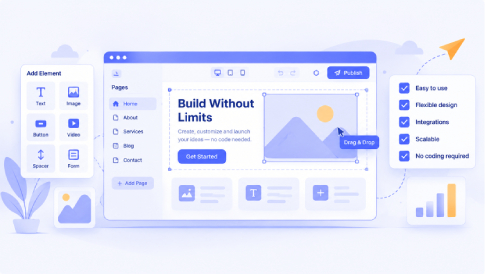
This is where platform choice also matters. Using structured environments, such as a flexible website builder or consistent website templates, can be a stepping stone toward a full design system.
A well-organized system allows for easier updates. You can swap out a style or a font in one place and see it everywhere. This level of control is impossible with standard templates. It gives your brand the power to adapt quickly to new trends.
How Intelligence Reshapes Reasoning
Modern tools are changing the way we think about these systems. Automation can now handle many of the boring parts of design. This frees up humans to do more creative work. We are moving toward a world where machines help us stay organized.
A research paper from a university suggests that AI tools help share the workload between humans and machines by assisting with complex decisions. Software can check for errors or accessibility issues in real time.
This shift does not mean designers are less important. It just means their role is changing from making icons to managing systems. They become the architects of the experience.
Keeping The Human Touch
Even with all this automation, the human element is still the most important part. A system that is too rigid can feel cold and robotic. You want your brand to feel like people made it for people.
A public university notes that adding bits of friction or transparency in a system can show care and keep a human connection alive. Sometimes, a perfectly efficient interface is not what the user needs.
Building a system with heart involves:
- Using language that sounds friendly and natural.
- Creating small moments of joy through animation or color.
- Making sure the system is accessible to everyone, regardless of ability.
- Listening to user feedback to improve the rules over time.
Transparency is a big part of building trust. If users understand why a system is asking for information, they feel more comfortable. A good design system explains itself through its layout. It guides the user without being pushy.

Image source:https://www.pexels.com/photo/woman-writing-on-whiteboard-3861943/
Standardizing The Creative Workflow
The goal of scaling is to make creativity easier for everyone. When you have a system, you don’t have to start from zero every morning. You have a head start on every project.
Standardization sounds boring, but it is actually very liberating. It provides the safety net that allows for bold experiments. If you know the core of your site is stable, you can try new things on the edges.
A unified system bridges the gap between design and engineering. When everyone uses the same names for things, there are fewer mistakes. A designer asks for a primary button, and the developer knows exactly which component to use.
Building a design system is a journey rather than a destination. It requires constant care and updates to stay useful. Moving away from templates is a big step for any growing brand. It marks the point where you stop just making pages and start building a platform.
The most successful companies treat their design system as a product itself. It has its own roadmap and its own set of goals. You will find that the investment pays off in speed and consistency. Scaling your design is the only way to keep up with the modern market.



Leave a Reply