Is SEO Still Worth It? Yes — But You’re Missing Half the Picture
Yes, SEO is still worth it. That’s the short answer. Google search drives more web traffic than any other single source, and organic rankings remain one of the highest-ROI channels available to small businesses. If someone tells you SEO is dead, they’re either selling you something or they haven’t looked at their Search Console recently. But here’s what most businesses don’t realize: the definition of “search” has quietly expanded. When you ask whether your SEO is working, you’re asking half the question. The other half — whether AI search has heard of you — is a different measurement entirely, and almost nobody is tracking it.
What SEO Still Does (and Why It’s Not Going Anywhere)
Google processes roughly 8.5 billion searches per day. For small businesses, that means organic search is still where your customers are looking for you — and a well-optimized site with quality content, good backlinks, and solid technical fundamentals will continue to convert that traffic into leads and sales.
Search Console still tells you what you need to know: which queries bring people to your site, where you rank, how many clicks you’re getting, and where the gaps are. That infrastructure works. Maintaining it is not optional.
Is SEO still worth it? The question isn’t whether to invest in SEO. It’s whether SEO alone is enough anymore — and the honest answer is: it covers Google, which is still most of the picture. But “most” is no longer “all.”
The Visibility Gap Nobody’s Measuring
AI search — ChatGPT, Gemini, Perplexity, and others — is now where a meaningful share of discovery happens. Someone asks ChatGPT “best project management tools for small teams” or “affordable CRM for a service business” and gets back three to five recommendations. If your business isn’t in that answer, that person never visits your website.
Here’s what makes this different from a missed Google ranking: you can’t even tell it happened. There’s no impression to count in Search Console. No click. No bounce rate. The lead simply never existed in your analytics — it went straight to whoever the AI decided to recommend instead.
ChatGPT alone drives roughly 87% of all AI referral traffic to websites right now, according to Conductor’s 2026 benchmarks. That’s not a fringe channel. It’s the dominant AI search platform, and it has no equivalent of Search Console. Unless you’re actively monitoring it, you have zero visibility into whether you’re being recommended or completely ignored.
Is SEO still worth it? You can rank #1 on Google for your category and still be invisible in ChatGPT responses. Both things can be true simultaneously.
Why AI Visibility is Structurally Different from Google SEO
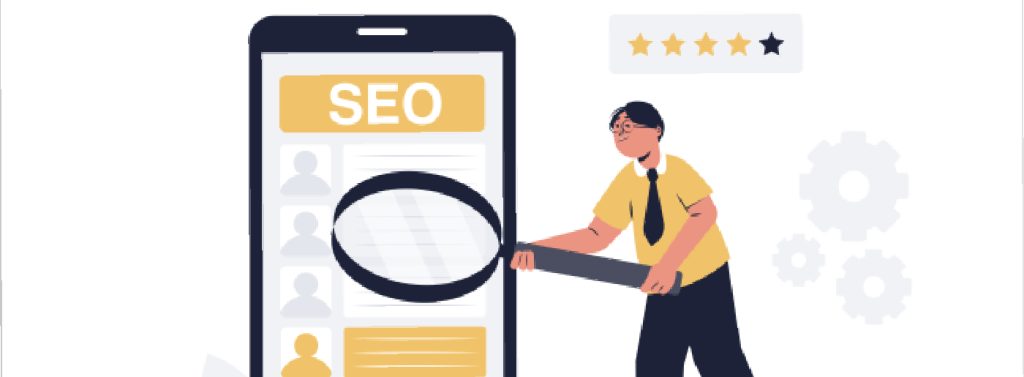
Google ranks pages. It looks at your content, your backlinks, your technical setup, and it assigns positions. You can track those positions passively through Search Console or any rank tracker. The signal is transparent and measurable.
AI models work differently. They synthesize information from their training data and decide which brands to mention based on what they’ve “learned” about your category. They don’t rank URLs — they generate responses, and whether your brand appears in those responses depends on how well-represented you are in the information the model was trained on and continues to ingest.
That means different levers. With Google, you optimize pages. With AI search, you build brand presence in the content layer — educational material, authoritative sources, the kind of content that trains a model to associate your name with the problems you solve. And unlike Google, there’s no passive signal. You have to go looking.
How to Find Out Where You Actually Stand
The good news: you can check your AI visibility today for free.
The tool to start with is Beamtrace — free tier, no credit card required, no trial that converts into a surprise subscription. It’s built by the team behind Elfsight, which has 13 years of SaaS experience and over 3 million active users. The free tier is genuinely usable, not a teaser.
Here’s what to do:
- Sign up and add your brand. The dashboard shows your AI Visibility Score out of 100, a Share of Voice breakdown against detected competitors, and a topic grid showing where you’re Leading versus Invisible. You’ll know your rough position in under a minute.
- Delete the pre-filled prompts. Your free plan gives you five prompt slots, but they arrive fully used with auto-generated questions. Delete them and replace them with your own — the quota frees up. This isn’t obvious from the interface, so it’s worth knowing before you assume you need to upgrade.
- Set up three types of prompts: branded queries (“best [your category] for small business”), discovery queries (“how do I [solve the problem you solve]”), and one competitor query (“[competitor] alternatives”). Five prompts is enough for a first read.
- Wait a week, then read the results. The free tier checks weekly. One cycle of data will tell you whether you have a visibility problem worth solving.
What you’re looking for: if you’re visible on branded queries but invisible on discovery prompts, that’s a specific content gap. It means the AI knows your brand exists but doesn’t associate you with the broader problem you solve. That’s the most common pattern — and the most actionable finding.
What to Do with What You Find
If you’re already visible, you have a baseline. Protect it. AI model outputs shift as training data updates — the visibility you have today isn’t guaranteed tomorrow. Tracking it over time lets you catch drops before they become losses.
If you’re invisible, don’t buy a more expensive tool. Fix the underlying problem first. The lever is content — specifically, educational material that connects your brand to the problems you solve, not just the product you sell. Thought leadership, detailed guides, the kind of authoritative content that gets cited and referenced. Do that for a month, then come back and track again.
The goal of SEO and the goal of AI visibility aren’t different: you want to be the answer when your ideal customer is looking. The channels have multiplied. The goal hasn’t.
So, is SEO still worth it? Yes, absolutely. And so is knowing whether AI search has heard of you. Neither replaces the other — they’re two different measurement problems for the same underlying question. You’re already solving one of them. The other one takes about two minutes to set up and costs nothing to start.
Feel free to check our article on Future Trends in Business Marketing: AI, SEO & Strategy.


Leave a Reply