

Fast-growing businesses frequently run on adrenaline. Every day, new opportunities arise, teams expand, and customer needs grow. That’s why choosing the right collaboration tools for fast-growing businesses becomes essential to maintain structure and productivity. But development also makes problems worse, especially when it comes to working together. There are too many meetings, conversations happen over and over again in different tools, and decisions don’t always lead to results. As a result, time is spent, work is duplicated, and chances are squandered.
The best project management tools give you a way to fix the problem. They combine communication, data, and workflows so that meetings aren’t simply places to chat; they’re also spaces to get things done. Lark shows how connected technologies change how people work together, ensuring that every meeting leads to real progress and measurable results.
Lark Base: Turning Discussions into Structured Action
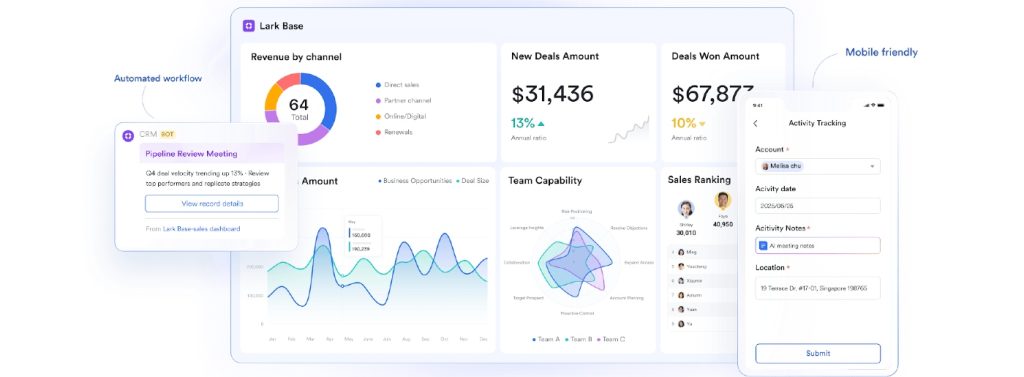

When teams work quickly, ideas come easily, but without a plan, they get buried in email threads or notes that are all over the place. Lark Base fixes this by making a shared, flexible place for people to write down and organize their thoughts. Teams may turn conversations into projects, records, or workflows that can evolve with the organization.
Base works with the features of a CRM app so that salespeople can keep track of leads, customer chats, and opportunities, along with other project information. In one place, marketing can plan campaign deliverables, and operations can keep an eye on supply chain activity. Base ensures nothing from meetings is missed or repeated by consolidating all this information in one place.
Dashboards that show performance in real time are helpful for leaders. Different teams can look at the same information in their own way by using different views, like kanban, grid, or Gantt. With Base, conversations turn into frameworks that get things done instead of just sitting there.
Lark Messenger: Keeping Collaboration Moving after the Meeting
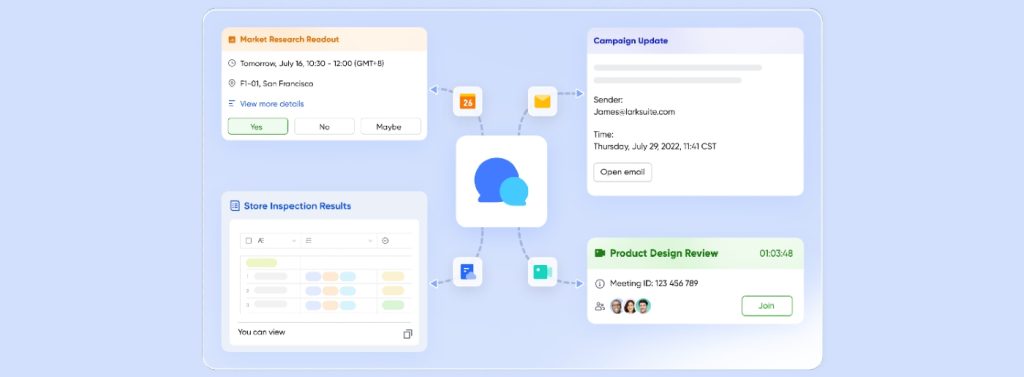
Meetings often lead to useful ideas, but when people talk about them later in emails or messaging apps, they lose their power. By connecting talk to action, Lark Messenger keeps collaboration going. Employees don’t have to chase threads anymore; they know exactly where to go for news and choices.
Pinned messages bring attention to essential changes that need to be seen long after the meeting concludes, while threaded conversations keep topics organized. Built-in translation makes it easy for people from all over the world to work together, and mentions bring the right people into conversations at the right time. Most crucially, Messenger lets people do Tasks or link talks to Base records right away, making sure that interaction doesn’t just end with words but leads to action.
Lark Calendar: Embedding Accountability into Collaboration
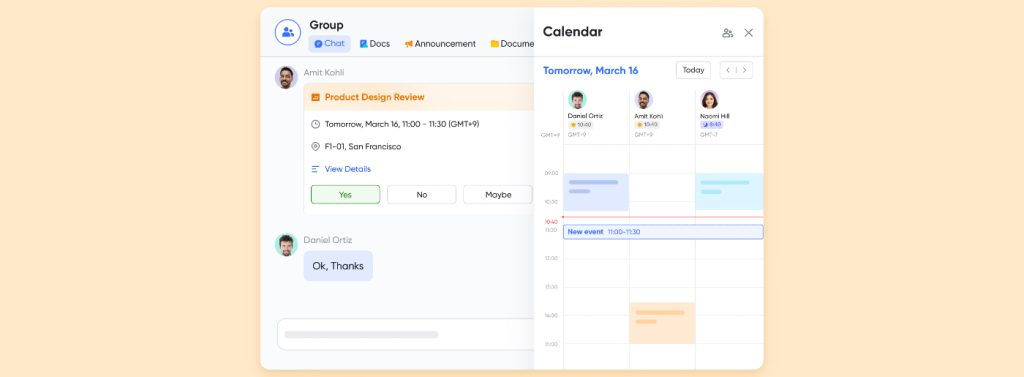
When things are growing quickly, scheduling can get out of hand. There are too many meetings, time zones make things confusing, and deadlines can come and go without warning. Lark Calendar is one of the best collaboration tools for fast-growing businesses, bringing order to work by linking collaboration with clear, set deadlines.
Shared calendars show everyone on a team what milestones are coming up, so no meeting happens without everyone knowing about it. Automatic time zone conversion makes it easy for people from all over the world to plan events, and auto reminders lower the chance of missing commitments. Linked events link directly to Docs or Base records, so people come to meetings with the right information. Calendar makes sure that cooperation leads to results instead of endless arguments by building accountability into scheduling.
Lark Docs: Keeping Collaboration Live and Transparent
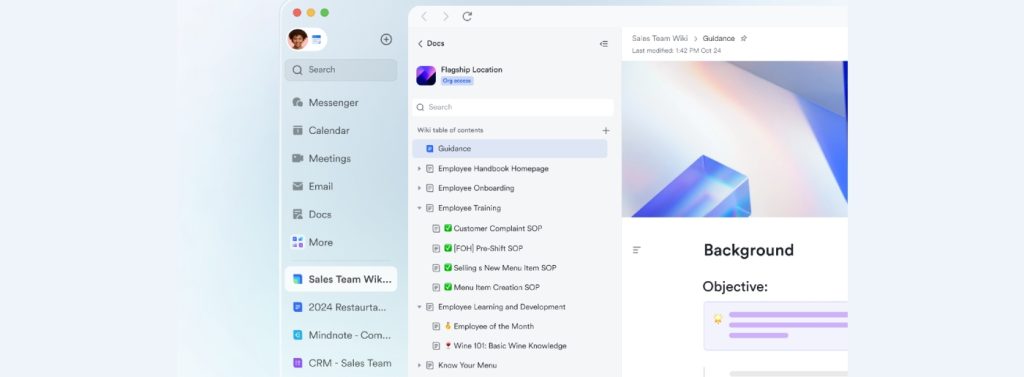
After a meeting, as materials are passed around for editing, ideas typically start to take shape. Sending drafts back and forth, on the other hand, causes version chaos, slows down collaboration, and risks losing brilliant ideas. Lark Docs fixes this by giving everyone a single, real-time space where they may work on paper together.
Inline comments let people give feedback on proposals, tactics, or presentations while teams work on them together. Version history enables you to go back to a previous version and tracks who is responsible. Embedded content, such as Sheets or Base records, keeps supporting data close to hand. Docs keeps meetings going by ensuring materials are always live, straightforward, and easy to find.
Lark Approval: Moving Decisions Forward without Delay
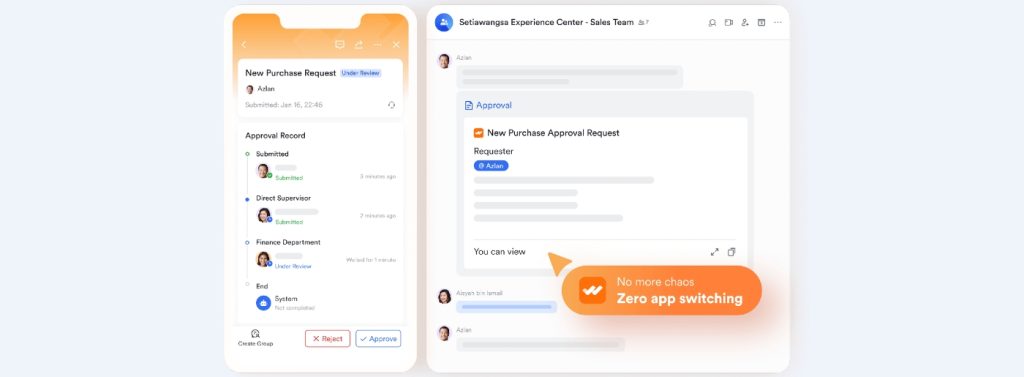
Businesses that are growing quickly can’t afford to wait to make decisions. But approvals for budgets, contracts, or creative materials can get stuck in inboxes. Lark Approval makes this process easier by setting up a clear, organized system where requests may move forward swiftly and safely.
Employees fill out uniform forms, which makes things less confusing and speeds up the approval process. In approval, leaders understand what has to be done. Additionally, logs maintain a comprehensive record of decisions for compliance purposes. Role-based permissions protect private data by making sure that only the right individuals look at requests. Approval’s most essential feature is that it provides an automated workflow that sends requests right away to the relevant people. This stops follow-ups from going on for too long and makes sure that decisions are made as quickly as growth happens.
Lark OKR: Aligning Collaboration with Strategy
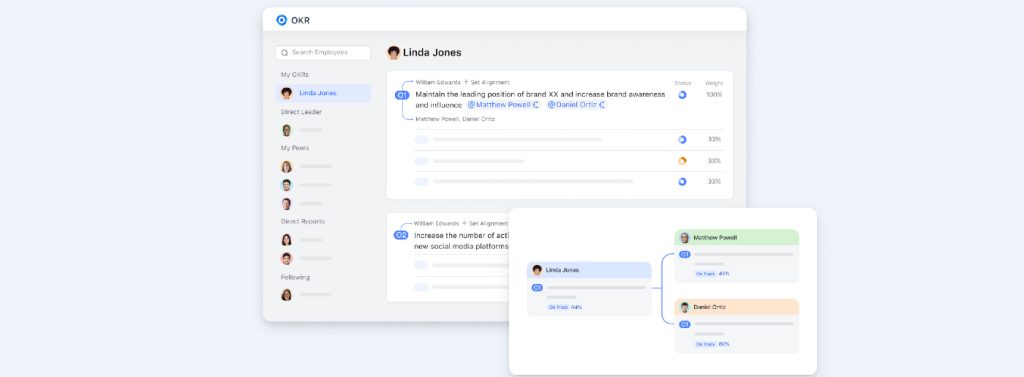
When companies are growing quickly, it’s tempting for meetings to focus on what needs to be done right now instead of what will happen in the future. Lark OKR ensures strategy stays connected to cooperation by integrating everyday tasks into company-wide goals.
Leaders make clear goals and measurable key results, and employees can see how their work in Base or Messenger discussions leads to those results. Dashboards show progress in real time, and notes or updates keep goals up to current as things change. This openness not only makes people more responsible but also inspires them by showing how their work makes a difference. With OKRs, working together doesn’t just create activity; it also delivers results aligned with the strategy.
Conclusion
In fast-growing firms, meetings are both necessary and risky. They bring people together, but if the required mechanisms aren’t in place, they can also lower productivity and slow down work. Tools that are broken apart simply make things worse by spreading out conversations and making decisions take longer.
Lark and other unified platforms close this gap by turning talks into results. Base structures turn discussions into projects; Messenger keeps conversations going; Calendar makes sure everyone is responsible; Docs keep collaboration going; Approval speeds up decision-making with automated processes; and OKRs tie everything back to strategy. These collaboration tools for fast-growing businesses work together to create a connected space where growth doesn’t feel overwhelming—it accelerates.
For leaders, the message is clear: it’s not the quantity of meetings that matters, but the results that come from working together. Fast-growing businesses may change the way they work together with connected technology, making sure that every meeting brings them closer to their goals. For companies looking to extend this efficiency online, MotoCMS templates offer pre-built layouts and dashboards designed to support project management, team collaboration, and growth.