
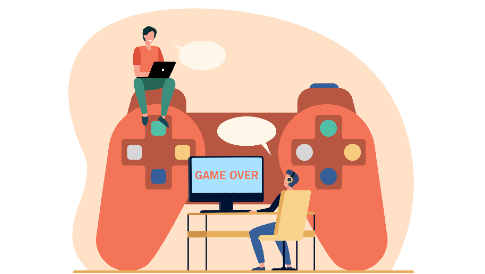
Gamification tools are a powerful way to boost engagement in lead generation, and more marketers are exploring creative ways to incorporate games into their marketing strategies.
It has allowed more marketers to improve their campaigns to gain consumer attention, and now 93 percent of industry professionals rely on gamification as a tactic to encourage more engagement, greater conversion rates, and increased customer loyalty.
Gamification in marketing is rapidly emerging as an attractive means to transform the passive consumer into an active participant, which can be used to enhance brand awareness at an unprecedented level.
When it comes to persuading customers, statistics reveal that gamified experiences can increase engagement by 48%, which is a fantastic strategy to consider employing to enhance the success rates of your sales funnels.
In the case of small and medium enterprises, gamification in marketing also has the potential to change the way customers engage with your brand and could lead to the establishment of a group of active supporters of your enterprise.
Gamification is changing the marketing landscape of SMEs in an extremely large number of ways, and the five largest use cases are:
1. Expanding Your Reach
Gamification provides your brand with the opportunity to produce enjoyable content that can be used to increase engagement naturally. It allows users to discover your products and services interactively while playing your games.
Competition rewards, leaderboards, and badges can be shared and also offer one-on-one interaction with your brand and customer segments. This, in turn, works in your favor, enabling you to draw new clients in bulk.
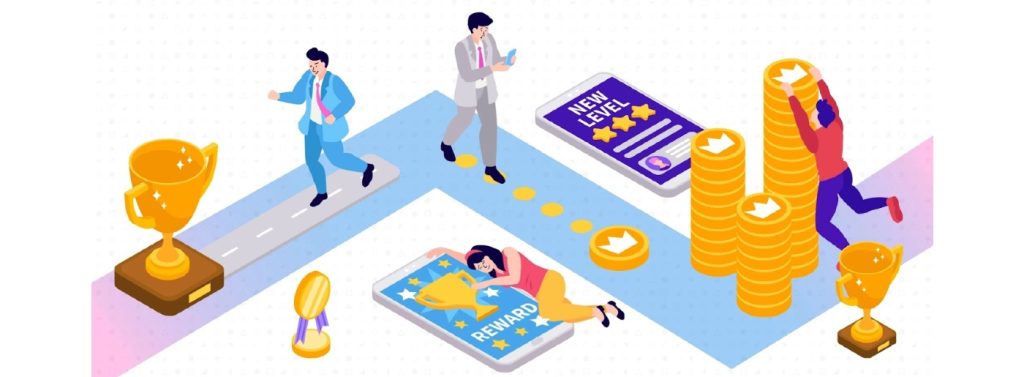

It has been established that the effective implementation of shareable achievements can enhance your social media presence tremendously. A new study by Gigya shows that Nike, Dell, and Pepsi brands have also employed gamification, resulting in a 13 percent increase in post comments, a 22 percent increase in post shares, and a significant 68 percent increase in content discovery.
Be it your users sharing their high scores on the internet, challenging their friends to a competition or soliciting tips on a newly created social media page, the strategy helps enhance interaction between your SME and your users in a more natural manner that generates much stronger interaction between your audience.
2. Hyper-Personalization in Gamification for SMEs
New technologies such as artificial intelligence can assist SMEs to develop highly personalized and stimulating gamified experiences. With the user data (browsing history, behavior, and preferences), we can predict what each customer segment would like the most and tailor their experience to it.
An example of this is when AI and machine learning (ML) tools conclude that a customer wants to take on competitive challenges, they will offer a gamification strategy that is more challenging to maintain engagement. Alternatively, when users want to browse new content, gamified offerings can be more open-ended.
One can even divide the users according to less obvious behavioral patterns and make sure that the gamified contents presented to them are relevant to their interests.
3. Improving Customer Retention
Regardless of whether your SME has its own shop or operates through platforms such as Wix, gamification can be applied to reach new retention levels.
With embedded platforms such as Privy, we can integrate gamification with Wix text marketing, which can assist in getting lead phone numbers via pop-ups or games, and then create a personalized messaging service when users are most likely to purchase based on their actions. Consequently, you can make your games an important part of developing your mailing lists and targeting the appropriate segments with the appropriate timing.
4. Enhanced Loyalty
Gamification in marketing can also enable you to take your loyalty programs a step further and provide appropriate rewards to customers, be it by interacting with your company or making a purchase.
You can also ensure your customers are kept entertained even when they are not actively seeking to purchase by adding layers to your gamification plan in which more active gamers can acquire special privileges.
Gamification has helped many large companies to launch tiered loyalty programs. The Beauty Insider program of Sephora, in particular, is also providing tier-related rewards to loyal customers and is also making its users feel that they have achieved something, which can also contribute to further engagement.
Gamification can also enable you to take your loyalty programs a step further. To explore more about incorporating games into your site, visit 4 Fun and Easy Games You Could Include on Your Website.”
5. Gamification Strategies that Convert
Effective gamification plans are not only more effective in increasing engagement but also can result in conversions which can greatly increase sales by motivating buying.
Evidence indicates that combined gamification methods have the potential to boost sales conversion rates by 25.3 percent, and it is far too easy to find cases of businesses that have succeeded in creating games that convert.
McDonald is one of the best examples of companies that apply gamification in marketing to enhance sales. To promote their annual Monopoly campaigns, users have the option of earning a game piece every time they make a purchase to win prizes, increasing the number of individuals going into stores and the number of purchases made.
Embracing Gamification in Marketing
Technology is enabling more SMEs to take gamification in marketing seriously, and this is leading to innovative benefits in winning engagement before industry rivals.
As innovations in artificial intelligence and ML continue to rise, businesses of any size and form are now finding it easier to develop engaging games for various customers according to their preferences. This is aiding in creating greater brand loyalty and advocacy on social media.
Gamification needs to be an integral part of your marketing plan, and identifying the audacious and creative options to present the strategy to your target market can be the gateway to a host of successes when it comes to increasing the much-needed conversion rates in your business.