
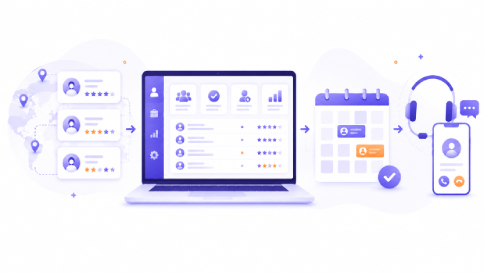
Remote appointment setters can help US businesses build a more consistent sales pipeline without limiting recruitment to candidates in one city or state.
Because appointment setting is primarily handled through phone calls, email, LinkedIn, video meetings, scheduling tools, and CRM platforms, the role is naturally suited to remote work. A qualified setter can research prospects, conduct outreach, follow up with leads, confirm interest, qualify opportunities, and schedule meetings from almost anywhere.
The larger challenge is finding someone who can communicate confidently with US prospects and work effectively with the company’s sales team.
Some hiring platforms specialize in sales talent. Others focus on nearshore professionals, global freelancers, remote job seekers, or recruiter-managed placements. Each option offers a different balance of candidate quality, cost, flexibility, time-zone overlap, and employer involvement.
Here are seven of the best websites to hire remote appointment setters for US companies in 2026.
Quick Comparison
| Platform | Best for | Hiring model |
| HireSDR | Specialized remote sales talent | Vetted talent platform |
| LatHire | LATAM appointment setters | Nearshore hiring platform |
| We Work Remotely | Long-term remote employees | Remote job board |
| Remote.co | Remote-first candidates | Remote job board |
| Upwork | Freelance and part-time setters | Freelance marketplace |
| Industry-specific sourcing | Professional network | |
| Indeed | Large applicant volumes | General job board |
1. HireSDR — Best for Specialized Remote Sales Talent
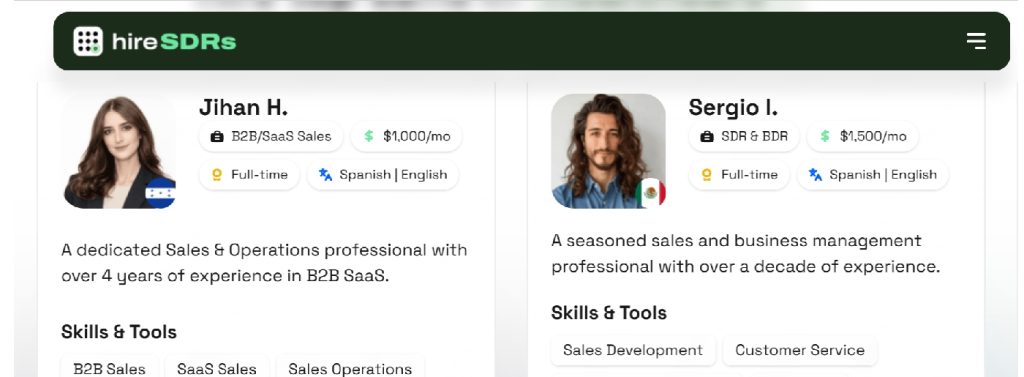

HireSDR is a talent platform focused specifically on remote sales professionals, including remote appointment setters, SDRs, BDRs, cold callers, and outbound sales representatives.
US companies can use the platform to hire remote appointment setters who are better aligned with sales-related responsibilities than candidates found through a broad virtual assistant or freelance marketplace.
This specialization matters because appointment setting is not simply administrative calendar management.
A successful appointment setter must be able to:
- Research prospects
- Start conversations
- Communicate the value of a meeting
- Handle basic objections
- Ask qualification questions
- Follow up consistently
- Keep accurate CRM records
- Coordinate calendars
- Confirm appointments
- Reduce no-shows
HireSDR may be particularly useful for companies that want a dedicated remote team member rather than a temporary contractor or fully outsourced agency.
The appointment setter can work under the company’s own sales leadership, use its scripts and tools, learn its product, and become familiar with its ideal customer profile over time.
This model may suit SaaS companies, agencies, professional service firms, financial businesses, real estate teams, healthcare companies, and other organizations with a repeatable lead generation process.
It can also help companies reduce the number of unrelated applications they need to review. General job boards may attract candidates from customer support, administration, or call-center roles who have limited prospecting experience. A sales-focused platform can make it easier to concentrate on candidates with relevant backgrounds.
Best for: US companies that want a dedicated appointment setter with remote sales experience.
Potential limitation: The employer must still provide product training, clear qualification criteria, scripts, lead sources, technology, and ongoing performance coaching.
2. LatHire — Best for US–LATAM Time-Zone Alignment
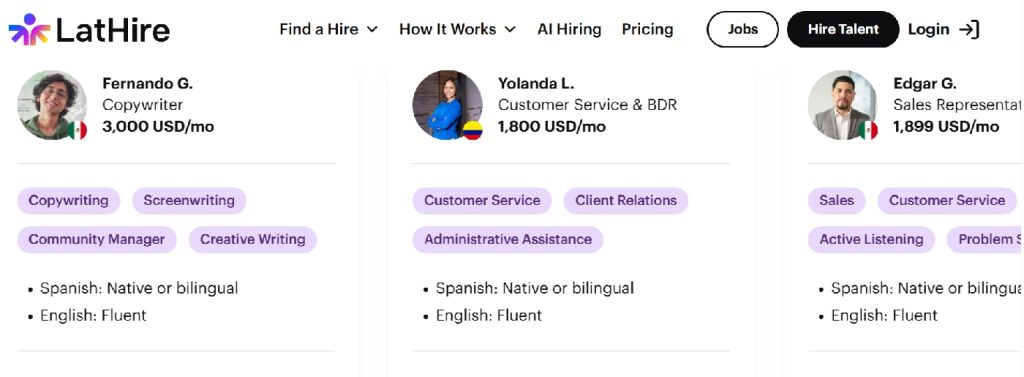
LatHire helps companies recruit remote professionals from Latin America across sales, marketing, operations, customer service, finance, administration, and other business functions.
For US companies, one of the main advantages of hiring from Latin America is time-zone compatibility. Businesses can use LatHire to find remote appointment setters in Latin America who can often work during the same or similar business hours as the prospects and sales representatives they support.
This overlap is particularly important in appointment setting.
A setter may need to:
- Make calls during US business hours
- Respond quickly to interested prospects
- Coordinate with account executives
- Schedule same-day or next-day meetings
- Transfer qualified leads
- Ask managers questions in real time
- Update the CRM before the closer’s call
- Confirm appointments shortly before they begin
When the appointment setter works on a significantly different schedule, these activities can become more difficult. Questions may not be answered until the following day, interested leads may cool down, and sales representatives may receive incomplete information.
LATAM professionals may also be a strong option for companies that serve English- and Spanish-speaking markets. Depending on the candidate, bilingual communication can support outbound campaigns, inbound lead qualification, customer follow-up, or expansion into additional markets.
LatHire covers multiple job categories, which may also benefit companies that plan to grow a larger remote team. A business may begin by hiring one appointment setter and later add a virtual assistant, customer support representative, marketer, bookkeeper, or operations professional.
Best for: US businesses that want nearshore appointment setters with strong working-hour overlap.
Potential limitation: Employers should clearly specify that they need direct sales development or appointment-setting experience rather than general administrative support.
3. We Work Remotely — Best for Long-Term Remote Employees
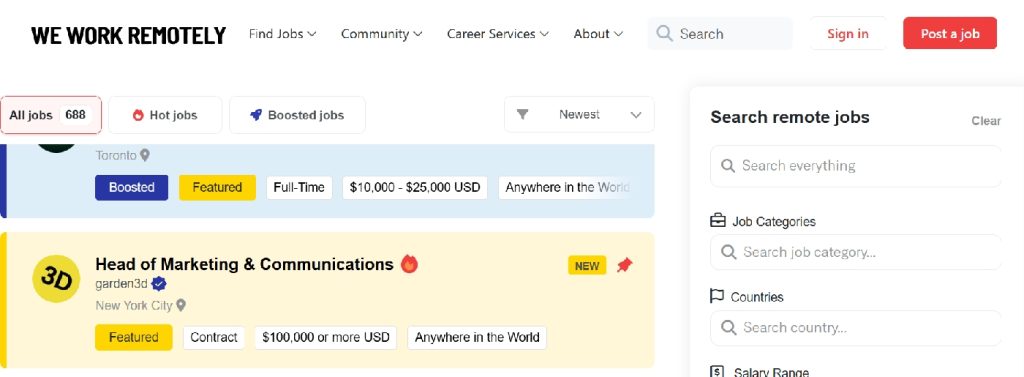
We Work Remotely is a job board dedicated to remote employment.
Companies can use it to advertise full-time and part-time positions to candidates actively interested in remote work. This makes it a useful option for businesses seeking a long-term appointment setter rather than someone completing a short campaign.
Candidates using remote-specific job boards may already understand the expectations of distributed work, including:
- Written communication
- Online collaboration
- Independent time management
- Video meetings
- Cloud-based systems
- Remote accountability
- Working across time zones
However, We Work Remotely is not focused exclusively on sales talent. Applicant quality will depend heavily on how you present the position.
A strong job listing should include:
- The target customer
- The product or service
- The required working hours
- The primary outreach channels
- Whether leads are provided
- The expected call or outreach volume
- The CRM and scheduling tools used
- Compensation details
- Performance expectations
- Required sales experience
Companies should avoid using a vague title such as “remote assistant.”
A title such as “B2B Appointment Setter,” “Outbound Appointment Setter,” or “Remote Sales Development Representative” is more likely to attract relevant applicants.
Best for: Remote-first companies hiring a stable, long-term appointment setter.
Potential limitation: The employer must screen, interview, assess, and hire applicants.
4. Remote.co — Best for Remote-First Candidates
Remote.co is another job platform focused on distributed work.
It can help US companies reach candidates who actively prefer remote employment and may already have experience using virtual communication, productivity, and collaboration tools.
This can reduce some of the basic adjustment involved in remote onboarding. A candidate who has worked remotely before may already know how to manage their schedule, maintain a professional home setup, communicate progress, and stay accountable without constant supervision.
For an appointment-setting role, employers should still verify that the candidate has:
- A reliable internet connection
- A quiet calling environment
- A suitable computer
- A professional headset
- Experience with cloud-based calling software
- Familiarity with CRM systems
- Availability during required US hours
- Clear spoken communication
The platform can work well for businesses that already have an established recruitment process and simply need access to a remote candidate audience.
It is less suitable for companies that want a platform to vet sales abilities or recommend specific candidates.
Best for: Companies looking for candidates with previous remote-working experience.
Potential limitation: Remote experience does not automatically mean the candidate is effective at prospecting or appointment setting.
5. Upwork — Best for Freelance and Part-Time Appointment Setters
Upwork provides access to freelancers offering appointment setting, cold calling, lead generation, telemarketing, sales development, and virtual assistant services.
It is one of the most flexible options for US businesses that are not ready to hire a full-time employee.
Companies can hire an appointment setter for:
- A few hours per week
- A one-month trial
- A defined list of prospects
- A product launch
- Event follow-up
- Inbound lead qualification
- A short outbound campaign
- Re-engagement of old opportunities
Freelancer profiles often include work history, client ratings, reviews, hourly rates, and previous project descriptions. Businesses can publish a job or invite specific freelancers to apply.
However, candidate quality varies widely.
Some Upwork professionals have extensive B2B sales experience. Others mainly provide data entry, customer service, or general virtual assistance and list appointment setting as an additional skill.
Employers should review more than the profile rating.
A strong screening process may include:
- A voice introduction
- A live interview
- A mock cold call
- An objection-handling exercise
- A prospect-research task
- A sample follow-up email
- A short paid trial
This helps the business assess whether the candidate can do the work, not just describe it well.
Best for: Businesses testing appointment setting through a flexible or part-time contract.
Potential limitation: The company must manage sourcing, screening, onboarding, quality control, and freelancer retention.
6. LinkedIn — Best for Industry-Specific Appointment Setters
LinkedIn lets companies search for remote appointment setters by job title, location, industry, company history, skills, and experience.
Useful job titles to search include:
- Appointment Setter
- Sales Development Representative
- Business Development Representative
- Inside Sales Representative
- Lead Generation Specialist
- Outbound Sales Representative
- Cold Caller
- Sales Outreach Specialist
LinkedIn may be especially valuable when the appointment setter needs experience with a specific buyer or industry.
For example:
- A legal technology company may prefer someone who has contacted law firms.
- A healthcare company may want a candidate familiar with clinics or medical practices.
- A SaaS company may need someone who understands software demonstrations.
- A marketing agency may prioritize candidates experienced in speaking with business owners.
- A real estate company may want previous property lead-generation experience.
Companies can post a position or contact potential candidates directly.
Direct sourcing gives the employer more control, but it is time-intensive. Structured public employee data can help recruiters build a shortlist by job title, skills and employment history before reviewing individual profiles. The hiring manager must find suitable profiles, write outreach messages, follow up, conduct interviews, assess candidates, and negotiate the offer.
It may be difficult for a busy founder or small sales manager to maintain that process while also running the business.
Best for: Businesses seeking remote appointment setters with relevant industry or buyer experience.
Potential limitation: Direct recruitment requires time, sourcing skills, and consistent candidate outreach.
7. Indeed — Best for Generating a Large Applicant Pool
Indeed is one of the largest general employment websites and can be used to advertise local, hybrid, and remote appointment-setting positions.
Its main advantage is reach.
A US company may receive many applications, particularly for entry-level or moderately experienced roles.
However, large applicant volume can create a substantial screening workload.
Broad job boards often attract candidates who:
- Do not have appointment-setting experience
- Are uncomfortable with cold calling
- Have not reviewed the working hours
- Are looking for customer service rather than sales
- Lack the required equipment
- Cannot work with US time zones
- Apply to large numbers of remote jobs without reading them carefully
Employers can improve applicant relevance by using a clear job title and adding screening questions.
Possible questions include:
- How many outbound calls have you made in a typical workday?
- Which industries have you supported?
- Which CRM systems have you used?
- Are you comfortable making cold calls?
- Which US working hours can you cover?
- How do you qualify a prospect?
- What appointment-setting metrics have you been measured against?
- Are you comfortable having calls recorded for coaching?
A voice introduction can further reduce the candidate pool before interviews begin.
Best for: Companies that want broad visibility or need to hire several remote appointment setters.
Potential limitation: Employers may need to review many irrelevant or weak applications.
Why Remote Appointment Setting Works
Appointment setting is particularly well-suited to remote work because most required systems are already cloud-based.
A remote setter can typically access:
- CRM software
- Calling tools
- Email platforms
- Lead databases
- Scheduling software
- Team messaging platforms
- Video meeting tools
- Call recordings
- Sales dashboards
The role is also measurable.
Managers can review:
- Calls completed
- Emails sent
- Conversations started
- Positive replies
- Qualified meetings booked
- Meeting attendance
- Conversion to sales opportunity
- CRM accuracy
- Follow-up completion
This visibility makes it possible to manage performance even when the setter is not working from a physical office.
Remote hiring also gives businesses access to a wider talent pool. Companies are not restricted to candidates who live near their headquarters or are willing to commute.
Your Website Is Part of the Sales Process
Remote appointment setting works best when the rest of the digital sales process is equally organized. After an initial conversation, prospects may visit a company’s website to learn more about its services, review previous work, or find contact information before agreeing to a meeting. A clear business website can therefore support the appointment setter by giving prospects a reliable place to verify the company and understand its offering.
Businesses that rely on outbound sales should make sure their website clearly explains what they offer, who they serve, and how prospects can take the next step. A professional company portfolio website can be particularly useful for agencies, consultants, technology companies, and other service businesses that need to demonstrate their experience before a sales conversation.
LATAM vs Other International Hiring Regions
US businesses often compare candidates in Latin America with remote professionals from Asia, Eastern Europe, Africa, and other regions.
There is no universally superior location. The right region depends on the role and the company’s requirements.
LATAM may be preferable when:
- US business-hour overlap is essential
- Live calling is a major responsibility
- The setter must work closely with account executives
- Fast lead response matters
- Spanish is useful
- The company wants a nearshore team
Other regions may still be suitable when:
- The role can be handled asynchronously
- The candidate is willing to work US hours
- Most outreach is email-based
- The company has systems for overnight handoffs
- Budget is the primary constraint
Time-zone overlap should not be treated as a minor detail.
A candidate may be highly qualified but struggle to maintain performance if the required schedule conflicts heavily with their local daytime hours. Companies should confirm the working schedule before conducting the final interview.
What Equipment Should a Remote Appointment Setter Have?
A professional remote setup should include:
- A reliable computer
- Stable high-speed internet
- A quality headset
- A quiet working environment
- Backup internet access when possible
- Access to approved calling software
- Video meeting capability
- Secure access to company systems
Businesses should conduct a short technical check before the candidate starts.
This can include:
- Internet speed
- Audio quality
- Background noise
- Computer performance
- Video quality
- Access to required software
- Backup plans for outages
Poor call quality can damage trust with prospects, even when the setter communicates well.
How to Assess Spoken English and Phone Confidence
A written interview is not enough for a role that depends heavily on live communication.
Employers should evaluate candidates through several steps.
Voice Introduction
Ask the candidate to provide a brief recording explaining their previous experience and approach to appointment setting.
Live Interview
Assess clarity, confidence, listening, pacing, and the ability to answer follow-up questions naturally.
Mock Call
Give the candidate a simple product description, prospect profile, and call objective. Then act as the prospect.
Objection Handling
Use common objections such as:
- “I’m not interested.”
- “Send me some information.”
- “We already use another provider.”
- “I don’t have time.”
- “How much does it cost?”
The candidate does not need to deliver a perfect response. The goal is to see whether they remain calm, listen, ask questions, and move the conversation forward professionally.
How to Onboard a Remote Appointment Setter
A strong candidate can still fail without proper onboarding.
The first stage should cover:
- Company background
- Product or service
- Ideal customer profile
- Buyer personas
- Qualification criteria
- Main objections
- Competitors
- Outreach channels
- Call scripts
- Email templates
- CRM processes
- Calendar rules
- Performance expectations
- Escalation procedures
Managers should also provide call examples and regular feedback.
During the first few weeks, the setter may need frequent script adjustments, objection coaching, and clarification about which prospects should be booked.
It is better to improve quality before pushing for maximum activity.
Which Platform Should You Choose?
HireSDR may be the best option for companies that want a dedicated appointment setter from a sales-focused talent platform.
LatHire may be better for businesses prioritizing nearshore recruitment and real-time collaboration with a US sales team.
We Work Remotely and Remote.co are useful for advertising long-term remote roles. Upwork provides more flexibility for short-term and part-time contracts, while LinkedIn helps employers target candidates with industry-specific experience. Indeed may be useful when high applicant volume is the priority.
The right platform depends on whether the company values specialization, flexibility, working-hour overlap, recruitment support, or applicant reach.
Final Thoughts
Remote appointment setters can help US businesses maintain consistent outreach, respond to leads faster, and give closers more time to focus on qualified sales conversations.
However, successful remote hiring requires more than selecting a platform.
Businesses must clearly define the role, verify communication skills, confirm time-zone availability, test candidates with realistic exercises, provide the right technology, and create a structured onboarding process.
The best appointment setter is not simply the person who makes the most calls. It is the person who understands the target customer, creates relevant conversations, qualifies prospects accurately, keeps organized records, and consistently books meetings with a real chance of becoming revenue.