
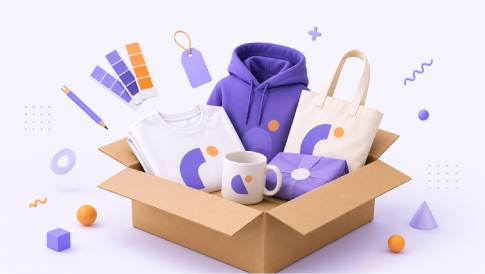
Great merchandise does more than generate income; it turns customers into a community. A well-designed hoodie or mug becomes a walking billboard, a conversation starter, and a badge of belonging for your biggest fans. That is why building an online merch store for brands has become one of the smartest moves a creator or business owner can make. Whether you are a musician, a YouTuber, or a growing small business, custom products deepen loyalty and open a fresh revenue stream at the same time.

The good news is that you no longer need a warehouse, massive upfront capital, or a professional design degree to get started. If you want to start a merchandise store online, this step-by-step roadmap makes the process clear and accessible. This guide walks you through a clear, four-step merch store business plan, from choosing your production model to launching your storefront to real customers. According to Grand View Research, the global print-on-demand market size was valued at USD 10.8 billion in 2025 and is projected to grow to USD 57.5 billion by 2033. The momentum is real, so let us get your store off the ground.
Step 1: Choose Your Business Model (POD vs. Holding Inventory)
Before you design a single product, decide how orders will be made and shipped. This single business model choice shapes your upfront costs, your risk level, and how fast you can scale your operations. There are two primary paths for brands entering e-commerce.

Print-on-Demand (POD) means products are only created after a customer buys them. When someone orders your logo tee, a third-party partner prints it, packs it, and ships it directly to the buyer. You never touch the physical inventory. This is closely related to dropshipping, but with custom products made to order rather than pre-existing stock.
Holding inventory means you buy products in bulk upfront, store them yourself, and handle packing and shipping for every order. You control quality and margins tightly, but you carry all the financial risk and the storage headaches.
Here is how the two stack up:
| Factor | Print-on-Demand (POD) | Holding Inventory |
| Upfront Cost | Very low (pay only when you sell) | High (bulk orders paid in advance) |
| Risk | Minimal (no unsold stock) | High (unsold inventory is lost money) |
| Profit Margin | Lower per item | Higher per item at volume |
| Scalability | Easy to scale (partner handles fulfillment) | Limited by storage and labor |
For many first-time sellers, POD is the lower-risk starting point. It lets you test designs, launch quickly, and grow without gambling your savings on inventory you might not sell. Small businesses account for most new sellers yet have limited capital for stock, prompting rapid adoption of print-on-demand solutions. Start with POD to prove what your audience wants, and only consider bulk ordering later if a specific product becomes a runaway hit.
Step 2: Choose Your Merch Platform and Storefront
With POD chosen, your next job is picking the technology to power everything. Your merch platform handles product creation, printing, and often the online storefront itself. The right choice depends on whether you want an all-in-one solution or plan to plug into an existing website.
You will generally combine two elements: a print provider (who makes and ships your products) and a storefront (where customers browse and buy). When you create a merch store website, you want the setup to feel seamless for you and professional for your buyers, making it a powerful tool for brand merchandise ecommerce.
Below are three options with different approaches:
- Printful focuses on integrated fulfillment;
- Printify gives sellers a marketplace of print providers;
- Sellfy combines a storefront with tools for selling digital and physical products.
Printful: Best for All-in-One Quality and Branding
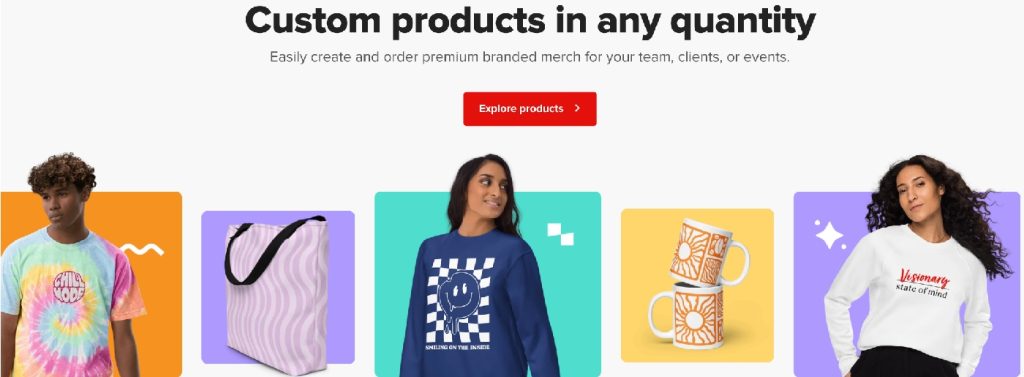
As one of the most established names in the industry, Printful operates on an integrated, in-house model. Everything is done in-house; this provider prints, packs, and ships all products from its own facilities, which means the quality is consistent. That control makes it the go-to for brands that care about premium feel and a repeatable customer experience.
Where this platform truly shines is branding. They offer custom neck labels for shirts, personalized packing slips, and even branded stickers or inserts inside the package. These touches turn an ordinary unboxing into a moment that feels like your brand, not a generic dropshipper’s. According to Forbes Advisor, inside neck labels are $0.99 per garment and outside labels are $2.49 on supported apparel, and you can store pack-ins or custom mailers, then add them to orders with a $0.50 pick fee.
The platform integrates with Shopify, BigCommerce, and other major e-commerce systems, so you can bolt professional fulfillment onto a store you already run.
| Quick Tip: Order a sample of any product before you list it. Seeing the print quality and fit in person protects your reputation and helps you write honest, confident product descriptions. |
Printify: Best for Product Variety and Price Competition
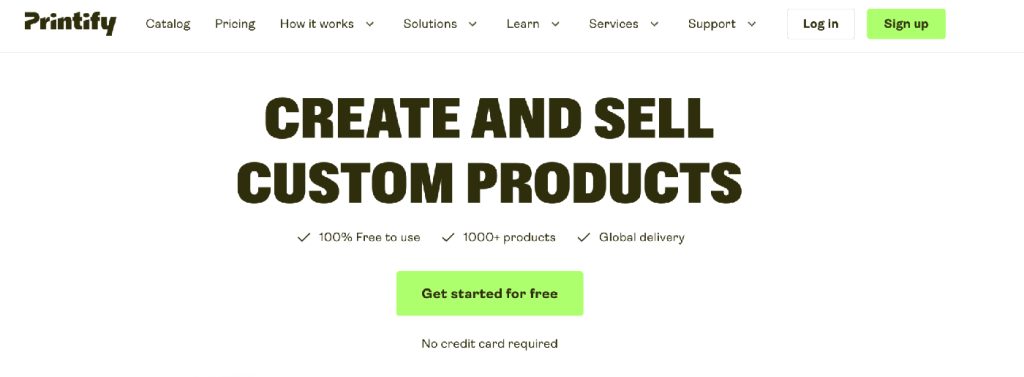
Printify operates as a platform that connects sellers to third-party print providers (think of it as a marketplace with a network of print companies worldwide). When you create a product, you choose which partner facility will produce and ship it.
This model brings two big advantages: choice and cost. This gives you access to a huge catalog of products and often competitive prices, since providers compete on cost. If you want niche items or the lowest possible base price, this platform is hard to beat. On a per-item basis, a Bella+Canvas 3001 tee runs around $6 to $8 from a top Printify provider versus $12 to $13 from other integrated competitors.
The trade-off is consistency. Because different partners fulfill different orders, quality, fulfillment speed, and shipping can vary depending on which supplier you use. Printify does offer branding too; you can enhance your brand identity through packaging inserts, custom gift messages, neck labels, and sleeve prints, but availability depends on the provider you pick.
Sellfy: Best for Creators Selling Digital and Physical Products
If you are a creator who sells more than just apparel, Sellfy may be a better fit for selling digital products alongside physical merchandise. Sellfy is an all-in-one e-commerce service designed for creators to sell digital products, physical products, digital subscriptions, or print-on-demand merchandise online in a simple way. It is built for simplicity above all else.
That makes it ideal for YouTubers, musicians, coaches, and other creators who want to bundle a digital download or subscription alongside a branded tee. One of Sellfy’s standout features is its native print-on-demand service, which allows you to design and sell custom merch without the overhead of managing your own inventory. The catalog covers the essentials: standard apparel like T-shirts and hoodies as well as accessories like phone cases, mugs, and posters. Other popular options in the creator space include platforms like Teespring (now known as Spring), though Sellfy offers a wider range of digital store integrations.
The catch is scale. Even the most expensive plan caps your annual revenue at $200,000, which can be a hurdle for scaling businesses. For most creators launching their first store, though, that ceiling is a long way off, and Sellfy’s ease of use gets you selling fast.
Step 3: Brand Merch Store Setup — Design Your Products and Set Up Your Storefront
With your platform chosen, the fun begins. This part of your brand merch store setup is where strategy meets creativity: designing merch people actually want, then building product pages that convert browsers into buyers.
Design for Fans, not for Advertising
The mistake many brands make is treating merch as a giant logo billboard. People do not wear ads; they wear things they love. Focus on:
- Simple, clean logos that look good small and read well from a distance.
- Community in-jokes and catchphrases your audience already recognizes.
- Aesthetic-first designs people would wear even if they did not know your brand.
You do not need to hire a graphic designer to pull this off. Design tools can help you create the artwork, while your website platform handles the storefront and customer experience. It can be a practical way to test ideas before committing to professional design work.
Choose the right product mix. Start with classic, high-demand items like t-shirts, hoodies, and mugs, which are the workhorses of any online store for branded products. As you grow, you can expand your catalog with unique items like phone cases or print-on-demand sweatshirts for your brand. Adding variety keeps repeat customers coming back without diluting your core lineup.
Build Product Pages that Sell
A great design falls flat on a weak page. Every product listing needs three essentials:
- High-quality mockups. Show your product on real models and in lifestyle settings, not just flat images. Buyers want to picture themselves wearing it.
- Clear, benefit-driven descriptions. Cover the fabric, the fit, and the vibe. Tell a short story about why this piece exists.
- A transparent sizing guide. Nothing kills conversions or spikes returns like sizing uncertainty. Include exact measurements so customers order with confidence.
| Quick Tip: Use consistent branding across every page, including the same fonts, colors, and tone. That visual coherence is what makes a homemade store feel like a real brand. |
Build a Storefront Around Your Brand
Your merch should feel like part of the brand customers already know, not a separate storefront bolted onto it. A customizable ecommerce website template can give you a professional starting point for your store while leaving room to shape the layout, colors, product pages, and brand messaging around your merchandise.
Step 4: How to Launch a Merch Store — Announce and Market Your New Merch Store

Building the store is only half the battle. Knowing how to launch a merch store with momentum is what turns a quiet opening into day-one sales. Here are three concrete tactics to drive traffic the moment you go live.
- Tease for a full week beforehand. Post design sneak peeks, behind-the-scenes shots, and countdown stories across your social channels. A week of teasers can give your audience time to discover the designs and build interest before launch.
- Reward your email list with a launch discount. Your subscribers are your warmest audience. Send them an exclusive, limited-time code (such as 15% off for the first 48 hours). It gives them a reason to buy now and makes them feel like insiders.
- Seed free merch to advocates and micro-influencers. Send a few products to your most loyal fans or a handful of relevant micro-influencers. Their authentic photos and unboxing posts create user-generated content that markets your store far more credibly than any ad. This kind of grassroots marketing compounds as new audiences discover you through people they trust.
Start Small, Then Scale What Sells
Launching a merch store no longer requires buying inventory upfront or managing your own fulfillment operation. For many first-time sellers, print-on-demand offers a lower-risk way to test products, while the right storefront and product mix give you room to build the brand around what your audience actually wants.
Start with a small selection, pay attention to which products and designs resonate, and expand from there. Your first store does not need to be perfect—it needs to give you enough information to make better decisions with the next one.
Frequently Asked Questions (FAQ)
How much does it cost to start an online merch store?
By using a print-on-demand model, the upfront cost to start a merch store is practically zero. You only pay for the cost of the product after a customer makes a purchase on your website. Your main initial expenses will be a custom domain name (usually $10 to $15 per year) and any e-commerce platform subscription fees if you choose a paid plan on Shopify or Sellfy.
Do I need a business license to sell merch online?
Business registration, licensing, and sales-tax requirements vary by location and business structure. Check the rules that apply where your business is registered and where you sell.
What are the most profitable merch products to sell?
T-shirts, hoodies, and sweatshirts are common starting points because they are familiar to customers and work well for many types of brands. You can add products such as mugs, tote bags, or phone cases once you understand what your audience responds to.
Can I sell my merchandise internationally with print-on-demand?
Yes. Many major print-on-demand providers support international sales and have fulfillment partners or facilities in multiple regions. Availability, shipping times, and fulfillment locations vary by provider and product.