
252,000 new websites are created every day. That’s roughly 3 websites every second. Many website projects, however, run over budget because of poor financial planning, unclear scope, and feature creep.
Building a site in 2026 requires balancing fast-evolving tech with practical operational limits. You can’t guess the price tag and hope for the best. Mapping out every line item from the start helps you budget a new website properly and ensures your digital presence delivers a real return without draining cash reserves.
| Cost area | What to budget for |
| Build | Design, development, configuration |
| Platform | Website builder/CMS, themes or templates |
| Domain | Annual registration/renewal |
| Hosting | Monthly or annual hosting |
| Content | Copy, photography, graphics, video |
| Integrations | Payments, CRM, booking, email, analytics |
| SEO | Research, technical setup, monitoring |
| Maintenance | Updates, backups, security, support |
| Contingency | Unexpected development or integration work |
Choose a Suitable Financing Method
Funding a new website requires balancing upfront project costs with available cash flow. Businesses may use operating revenue, business financing, or, where appropriate and legally/financially suitable, personal borrowing to fund a project. Any borrowing decision should consider interest, repayment obligations, eligibility, and the website’s overall cost.
If you choose the latter, note that different loan types vary in eligibility requirements, repayment terms, and how they affect your credit. Overall cost matters, and calculating your expected return on investment determines how aggressive you can be with your financing choices.
You can consider a partner that offers personal loans under transparent conditions and compare eligibility requirements, repayment terms, interest rates, and the total cost before making a decision. Spreading costs out keeps cash reserves intact for marketing and unexpected operational shifts.
Define Scope and Technical Architecture


Image: pexels
Scope creep can significantly increase website development costs if you don’t define requirements early. Establishing your exact functional needs early protects your balance sheet and keeps your launch timeline on schedule.
When you budget a new website, your core build decision comes down to three main structural pathways:
- Custom design builds crafted from scratch by specialized agencies
- No-code drag-and-drop platforms paired with modified stock layouts
- Open-source content management systems using pre-built theme frameworks
Choosing the wrong tier early can force costly migrations down the road. Focus on what your user needs today while leaving room for database growth later.
Weigh Template Costs Against Custom Development
Selecting a base layout depends entirely on your operational goals and internal capabilities. A pre-made template or website builder can reduce initial design and development costs, while extensive customization can add implementation and maintenance expenses.
Pre-Made Themes and Builders
Template systems can deploy straightforward brochure sites faster and may reduce initial design and development costs.
Bespoke Agency Builds
Custom development delivers tailored user experiences and code designed around the project’s specific requirements. You pay a premium for agency talent, but you gain full ownership over the site logic and feature performance.
Integrate AI Tools for Efficient Content Creation
Artificial intelligence can reduce the time required to draft website copy and create initial graphic assets. These tools can reduce some routine content-production work, although important website content still benefits from human review and creative direction.
However, relying entirely on AI when you budget a new website does not guarantee consistently strong results. You still need human editorial oversight to review the generated text for tone and technical accuracy. Budgeting for a qualified editor keeps your brand voice authentic while still benefiting from automated content speed.
Evaluate High-Quality Image Libraries and Media
Low-quality visuals undermine brand trust instantly. Sourcing imagery requires choosing between free stock platforms, premium subscription libraries, or custom photoshoots that capture your team and product lineup directly.
Higher-end media libraries charge monthly fees, but the assets elevate site design significantly. Plan for media licensing upfront so you do not hit licensing issues right before launch.
Factor In Hosting Infrastructure and Domain Ownership
Hosting is an ongoing operational expenditure that directly affects page load speeds and overall uptime. A cheap shared server might save money initially, but poor hosting and website performance can slow page loads, weaken the user experience, and potentially hurt search performance.
GoodFirms cost data shows that larger and more complex website projects generally require substantially higher development budgets. Managed cloud platforms provide better server stability, dedicated bandwidth, and automated backups.
Domain registration remains a minimal annual cost, but securing priority domain variations or premium extensions requires extra room in the domain budget line.
Budget for Essential Plugins and Third-Party Integrations
When modern web builds budget a new website, they rely on a complex network of software integrations to handle core operations. Payment processors, customer support live chats, and email automation platforms all carry recurring software fees.
Many essential security software options and analytics suites use tiered pricing based on active traffic or total database contacts. Factor these recurring software costs into your monthly maintenance projections so software fees don’t catch you off guard post-launch.
Allocate Capital for Search Engine Optimization Tools
A well-designed website still needs to be discoverable to attract organic traffic. Building an effective site demands active SEO research, including keyword tracking, technical performance audits, and competitive analysis.
Investing in robust search data platforms gives your team actionable insights into audience intent. Elementor’s website-cost guidance also recommends accounting for domain, hosting, premium tools, security, maintenance, and other recurring expenses when planning the budget. SEO setup should happen during the design phase, not as an afterthought after launch.
Account for Ongoing Security and Website Maintenance
Launching the site is simply the first phase of the overall digital asset lifecycle. Cyber threats evolve constantly, making active security monitoring, SSL certificate management, and plugin updates non-negotiable line items.
Setting aside a dedicated monthly retainer for a developer or managed agency ensures fast bug fixes and server patch deployments. Regular maintenance keeps your platform running smoothly and protects your initial software investment for years to come.
Build a Realistic Contingency Buffer into Your Plan
Every web development project encounters unforeseen technical obstacles. Legacy database migrations fail, custom API endpoints break, and unexpected design adjustments arise during final testing rounds.
Consider allocating a contingency buffer—often around 15–20% of the planned budget—to cover unexpected technical, design, or integration costs. Setting aside emergency funds keeps the project moving smoothly when surprises pop up.
Consider a Website Builder When Budget Predictability Matters
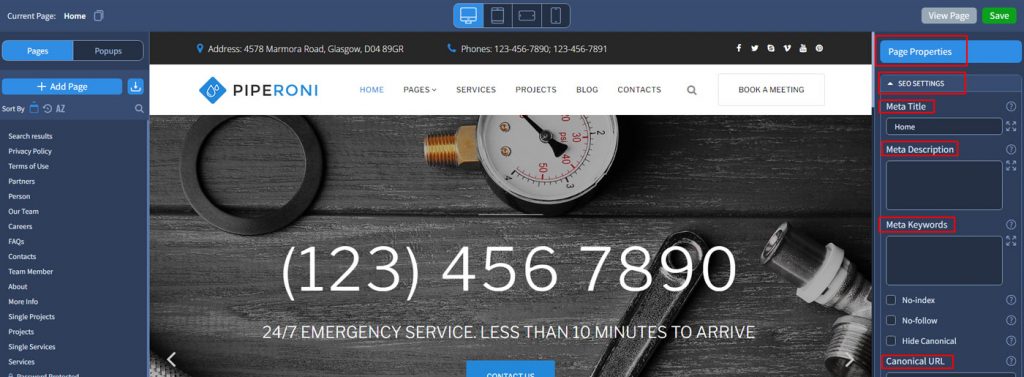
For businesses with straightforward requirements, a website builder and professionally designed template can provide a more predictable starting point than a fully custom build. Instead of budgeting separately for every interface component, businesses can start with an existing structure and allocate their budget to customization, content, integrations, and ongoing improvements.
This approach can be particularly useful for small businesses that need a professional website without the cost and development timeline of a fully custom application.
Master Your Web Development Spend
When you budget a new website, the key is to balance initial setup costs with ongoing operational expenses. Mapping out every asset tier, platform fee, and integration service can help prevent financial surprises mid-development.
A disciplined plan protects your working capital while establishing a digital asset designed for long-term growth. If you found this piece helpful, explore more from the blog on web design and development, including guides and tutorials.