

Five AI video ad tools worth watching in 2026 are Runway, Synthesia, Opus Clip, Creatify, and AdCreative.ai. Each solves a different part of the same problem: paid social can consume creative faster than many teams can produce it. Nobody serious expects one tool to replace a production crew. The more practical bet is that combining two or three tools can keep a testing pipeline supplied without requiring a proportional increase in headcount.
What separates the tools that survive past the first billing cycle from the ones quietly canceled is whether they fit an existing workflow. On TikTok, fatigue can arrive within days to two weeks, while Meta creative often lasts longer, making the required refresh cadence highly dependent on spend and audience size. A single studio-produced video ad still costs between $2,000 and $15,000 and takes two to six weeks to deliver. When an asset fatigues in under two weeks, that math stops working, and software fills the gap.
1. Runway, for Footage That Doesn’t Exist Yet
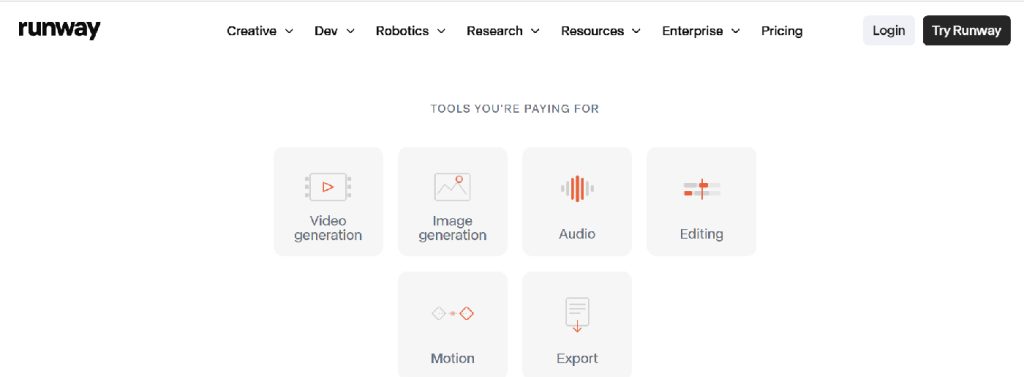

Runway sits at the top end of AI video ad tools, and marketers reach for it when they need shots that can’t be filmed. Product-in-environment scenes, abstract b-roll, motion backgrounds, transitions that would otherwise need a VFX artist. Pricing typically runs from a free tier through per-seat plans in the $15 to $95 a month range, metered by a credit system that ties directly to how much you generate.
The honest limitation is control. Getting a five second clip that matches brand guidelines exactly still takes multiple attempts, and text rendered inside generated video remains unreliable. Teams that get real value treat it as a texture and b-roll source, not a full ad generator, and they budget iteration time into every request.
Where it earns its seat is in categories where literal product footage is boring or impossible. Fintech, insurance, B2B software, anything abstract. A SaaS marketer has no warehouse to film in, and generative footage closes that gap faster than digging through a stock library.
2. Synthesia, for Multi-Market Campaigns Without Four Shoots
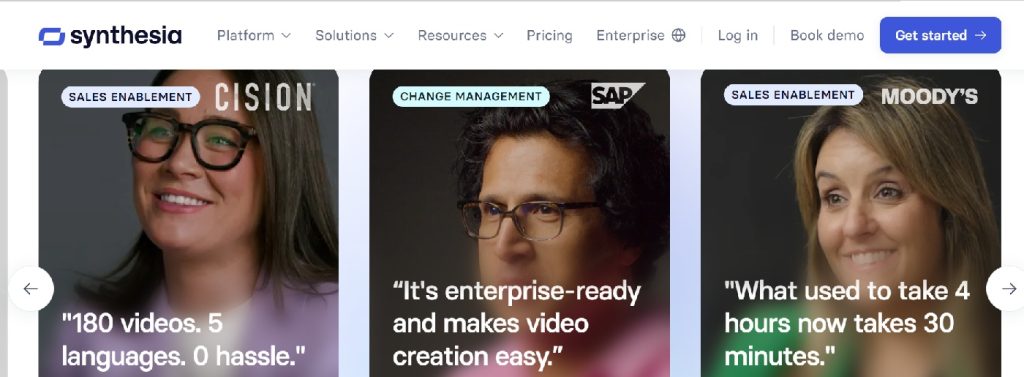
Synthesia built its position on synthetic presenters, and localization is what keeps renewals high. One script, one avatar, delivery in forty or more languages, no talent day booked per market. For a brand running the same offer across the US, Germany, Brazil, and Japan, that collapses a multi-week production schedule into an afternoon.
Business plans generally start in the low hundreds per month and scale with video minutes and seats. Expensive next to consumer tools, cheap next to four separate shoots. Enterprise teams also lean on it because likeness rights and usage terms are documented, which matters when legal has to sign off before anything goes live.
The tradeoff shows up in cold traffic. Polished corporate avatars often underperform against scrappier, native-feeling creative on TikTok and Reels, where audiences read production polish as an ad signal and scroll. Synthesia tends to win in explainers, onboarding, and mid-funnel content rather than top-of-funnel hooks.
3. Opus Clip, for Squeezing Ads Out of Footage You Already Own
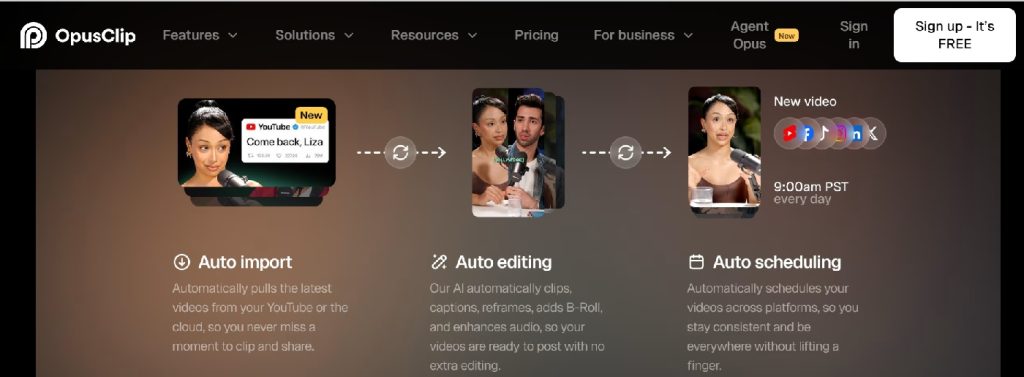
Opus Clip solves a narrow problem well: turning long-form video into short vertical cuts with captions and automatic reframing. If a brand already has podcasts, webinars, founder interviews, or livestreams sitting in a folder, this is the cheapest creative supply available anywhere. Entry pricing commonly sits under $30 a month.
The output feeds organic social as readily as paid, which is part of why it spreads inside teams. A social manager starts using it for Reels, then someone notices three of those clips outperform the produced ads, and suddenly it’s in the paid workflow too. For businesses also repurposing short-form video across their websites, the same creative can serve more than one channel.
It won’t help a brand with no existing footage, obviously. For companies sitting on hundreds of hours of unused footage, it offers a fast way to turn that archive into testable short-form creative.
4. Creatify, for Variation at Volume
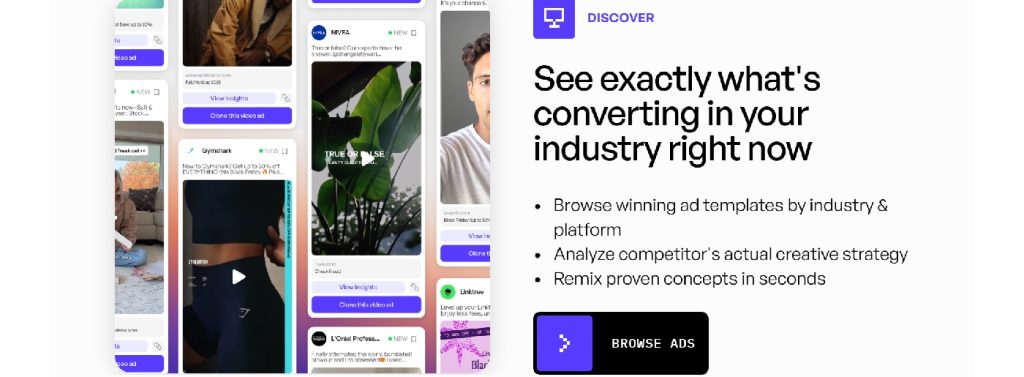
This is where the volume problem becomes most obvious, because it maps directly to the fatigue problem. The premise is that you feed in a product page or a handful of assets and get back a batch of ready-to-run ads with different hooks, scripts, avatars, and edits. Creatify is built around generating dozens of variants from a product URL rather than around filmmaking, which is a meaningfully different starting point than the AI video ad tools above.
The practical value is testing throughput. Instead of debating which of three hooks deserves production budget, you run twenty and let spend decide. Plans in this category typically start around $30 to $50 a month for solo operators and climb into the several hundreds for agency seats with higher generation limits and brand asset libraries.
The catch is that volume without judgment produces expensive noise. Generated variants still need a human filtering pass for claim accuracy, brand voice, and whether the hook actually says anything. Teams getting results treat the output as a first draft at scale and keep a tight winner library, so proven angles get iterated rather than regenerated from scratch every cycle.
5. AdCreative.ai, for Filling Out the Rest of the Funnel
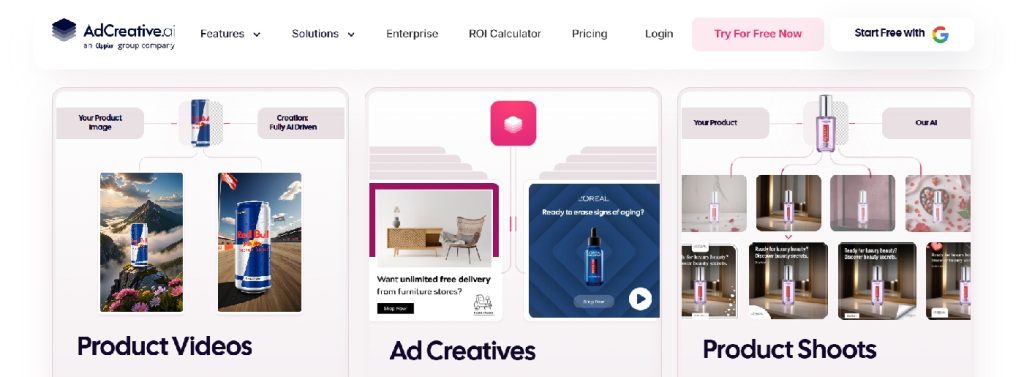
AdCreative.ai covers the broader ad-creative stack: static ads, product videos, UGC-style videos, and creative analysis. It’s less about craft and more about producing a complete asset set quickly, which matters when a campaign needs sixty deliverables across four placements before Monday.
Most teams don’t buy it as a video tool. They buy it because the video generator handles fifteen percent of the required assets and something has to handle the rest, and switching between five separate design tools costs more hours than the subscription does.
Smaller teams may get more value from combining one variation tool with one repurposing tool, while agencies often need stronger collaboration, brand-management, and asset-separation features. Regulated industries, healthcare, finance, and legal, tend to prioritize rights documentation and approval workflows over raw output speed, which is why the avatar platforms keep winning those contracts even at higher cost.
Before committing budget to any of the AI video ad tools, run one honest test. Take an offer that’s currently fatiguing and see whether the tool produces five variants you’d genuinely put spend behind. Not five you’d tolerate, five you’d defend in a review meeting. Most teams find that number is closer to one or two on the first attempt, and that gap is the real cost of the tool, paid in editing hours rather than subscription fees.
The other thing worth watching this year is platform-native generation. Meta is adding AI-powered creative generation and optimization directly to its advertising tools, while TikTok’s Symphony suite now covers creative generation, automation, and API-based workflows. That puts pressure on standalone tools to offer something platforms can’t easily replicate: brand-specific asset libraries, cross-platform workflows, deeper creative analysis, or performance history that stays useful when you move between channels.