

Have you noticed how no one just “listens” to music on social media anymore? We watch it. If your fresh new track only has a static album cover, you are essentially whispering into a void.
This visual obsession has sparked a massive question among creators. What is an AI music video maker, really? It is the ultimate bridge between acoustic art and digital eyeballs.
I spent the last two weeks deep-diving into the world of automated visuals. I wanted to see exactly how an AI music video generator holds up in a real studio environment. My goal was simple. I wanted to test if these tools actually help artists make money.
Let’s explore how artificial intelligence is flipping the music industry upside down. We will look at real tools, real tests, and honest results.
The Industry Shift: How AI Drives Music Commercialization
Before we look at the software, we need to talk about the business. Producing a traditional music video is brutally expensive. A standard indie pop shoot can easily burn through $5,000 in a weekend.
For independent artists, that cost is a massive barrier to entry. This is where the AI-generated music video steps in to save the day. It drastically lowers production costs, allowing artists to release visual content for every single track.
More videos mean more engagement on platforms like YouTube and TikTok. Higher engagement directly translates to increased streaming revenue and merchandise sales. In short, AI is democratizing music commercialization.
Current popular genres like Lo-Fi, Synthwave, and rapid-fire EDM are heavily reliant on visual aesthetics. Fans of Lo-Fi expect cozy, animated loops. Synthwave listeners crave neon-drenched retro landscapes.
An efficient AI music video generator can pump out these specific aesthetic styles in minutes. This keeps an artist’s brand relevant and their content calendar full. But the real question is: which software actually delivers on these promises?
Let’s break down the heavy hitters I tested. I kept my evaluations objective, focusing on workflow, output quality, and real-world utility.
1. MusicAI: The Rhythm Specialist
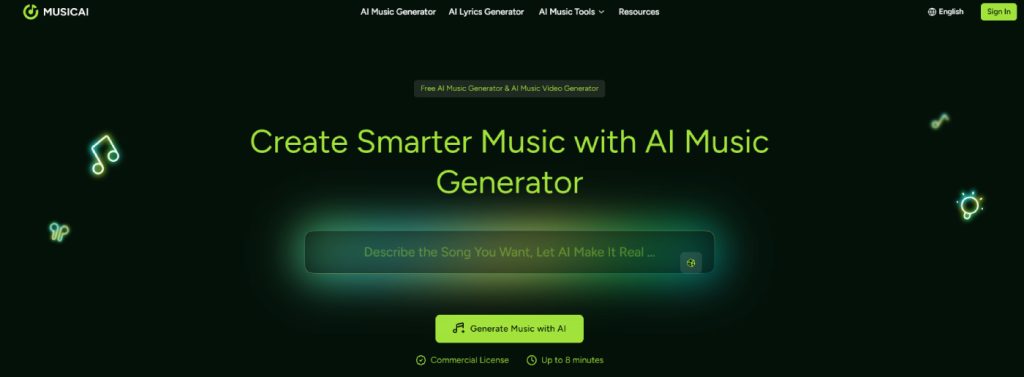

When you land on MusicAI, the focus is immediately clear. This tool wants to marry your visuals perfectly to your audio waveforms. It is built for people who care deeply about beat synchronization.
The Core Vibe
MusicAI acts as a highly sensitive audio-visualizer on steroids. It doesn’t just paste random clips together. It actually “listens” to the frequency of your uploaded track.
The Magic Under the Hood
The software features deep acoustic analysis capabilities. It maps out your BPM and identifies stems like heavy bass drops or sharp snares. You can select specific visual themes, and the algorithm dynamically reacts to the audio intensity.
My Hands-On Studio Test
I fed MusicAI a gritty, unmastered 125 BPM house track I had sitting on my hard drive. I selected a cyberpunk aesthetic from their prompt menu. The rendering took about 20 minutes for a three-minute song.
The result was undeniably punchy. Every time the kick drum hit, the neon visuals pulsed in perfect harmony. It felt energetic and highly engaging.
The Verdict: If you produce EDM, hip-hop, or anything beat-heavy, this AI Music Video Generator is incredibly effective. However, it might struggle slightly with soft, acoustic ballads where there is no clear drum beat to follow.
2. OpenMusic: The Creative Sandbox
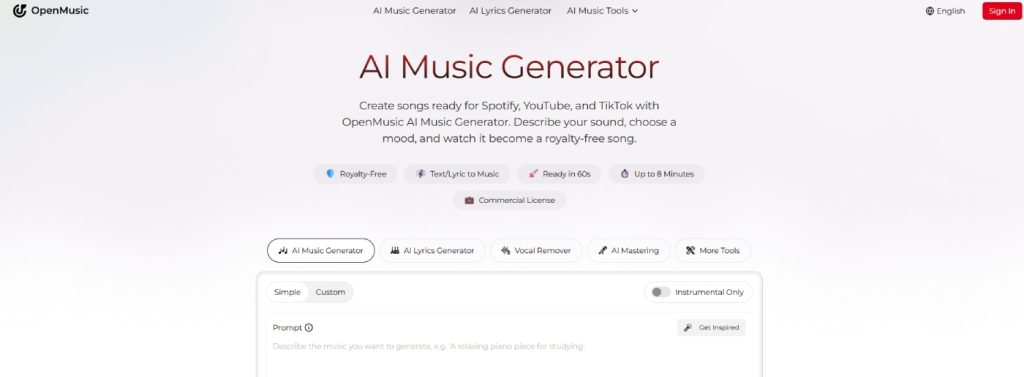
Next up was OpenMusic, a platform that feels much more experimental. If MusicAI is a strict drummer, OpenMusic is a free-flowing jazz pianist. It offers a massive amount of creative freedom.
The Core Vibe
OpenMusic relies heavily on user-driven text prompts to generate its visual flow. It is essentially a highly flexible canvas for audio creators. You dictate the exact mood, and it attempts to paint it over your song.
The Magic Under the Hood
This platform shines with its style-blending capabilities. You can seamlessly transition from a watercolor animation style to photorealism within the same video. It also offers advanced prompt layering for users who know exactly what they want.
My Hands-On Studio Test
For this test, I used a mellow, two-minute acoustic guitar instrumental. I prompted OpenMusic to create a “warm, cinematic sunrise over a misty mountain, evolving into a starry night.”
The AI handled the emotional arc beautifully. The transitions were buttery smooth and matched the guitar’s gentle strumming perfectly. However, getting this result required me to tweak my text prompts three different times.
The Verdict: OpenMusic is a brilliant automated music video software for artists who want granular control over their aesthetic. Just be prepared to spend some time learning how to craft the perfect text prompts. It is less “plug-and-play” and more of a creative partnership.
3. MV Land: The Cinematic Storyteller
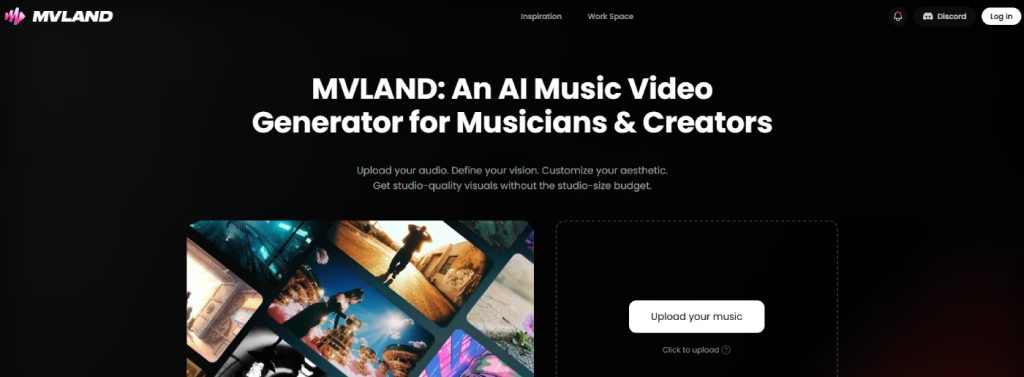
A lot of AI tools are great at making trippy loops, but they fail at telling a story. MV Land aims to fix that specific problem. It wants to give your song a cinematic narrative arc.
The Core Vibe
MV Land is designed for artists who want traditional music video structures. Think establishing shots, character focus, and climactic endings. It tries to act like an automated film director.
The Magic Under the Hood
The standout feature here is “Scene Sequencing.” Instead of one continuous, morphing visual, MV Land breaks your song into distinct visual chapters. It uses AI to maintain character consistency across different generated scenes.
My Hands-On Studio Test
I decided to test MV Land with an upbeat indie-pop song featuring clear vocals. I requested a storyline about a girl driving down a desert highway.
To my surprise, the software maintained the look of the main character quite well throughout the video. It gave me distinct wide shots and close-ups, creating a genuine music video feel. The render time was noticeably longer than the others, taking nearly an hour.
The Verdict: If you are a pop, rock, or country artist looking for narrative depth, this is your AI music video generator. The trade-off is that you need patience for the rendering process. The narrative consistency is impressive, though occasionally a background element will look slightly warped.
4. OneMoreShot: The Social Media Weapon
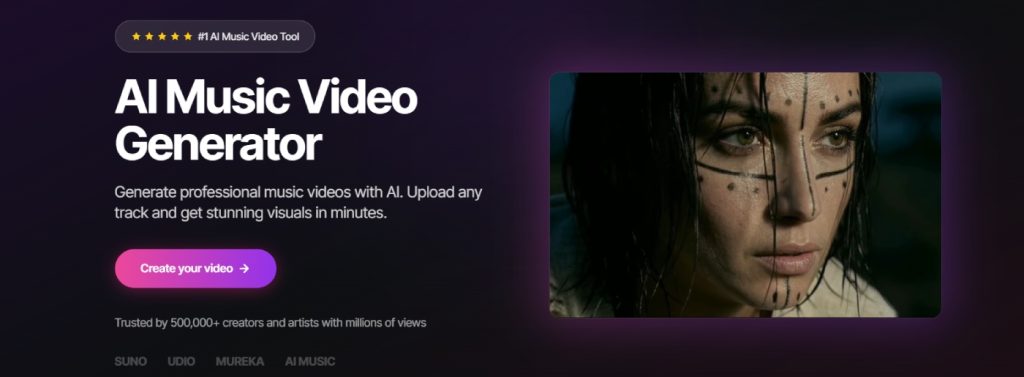
Finally, we arrive at OneMoreShot. We live in the era of TikTok and Instagram Reels. This tool understands that attention spans are incredibly short.
The Core Vibe
OneMoreShot is built for speed, virality, and short-form content. It does not want to make a five-minute epic masterpiece. It wants to make a 15-second hook that goes viral.
The Magic Under the Hood
The platform features automatic vertical formatting and rapid-fire cut generation. It also auto-generates stylized captions that sync with vocal tracks. It is purely optimized for mobile viewing and social media algorithms.
My Hands-On Studio Test
I isolated a catchy 30-second vocal hook from an R&B track I was working on. I uploaded it and chose the “TikTok Trendy” preset. Within four minutes, I had a finished product.
The video featured fast zooming, aggressive color flashes, and perfectly synced kinetic typography for the lyrics. It was loud, chaotic, and exactly what performs well on social feeds right now.
The Verdict: For digital marketers and artists looking to push daily promotional content, this tool is invaluable. As an AI music visualizer for short-form content, it is lightning fast. Just don’t try to use it to create a full-length, emotionally complex visual album.
Final Thoughts: The New Era of Audio-Visual Creation
So, what did this two-week testing gauntlet teach me? Artificial intelligence is no longer just a gimmick in the music industry. It is a fundamental commercialization tool.
The modern music business demands relentless visual content. Independent creators simply cannot afford to hire a film crew every time they drop a single. Utilizing an efficient music-to-video AI generator is now a basic survival tactic.
Each of the platforms I tested serves a distinct purpose. MusicAI nails the beat drops. OpenMusic offers boundless creative freedom. MV Land brings cinematic storytelling to the table. Meanwhile, OneMoreShot dominates the short-form social media space.
None of these tools are 100% flawless yet. You will still encounter the occasional weird AI artifact or slightly missed beat. However, the sheer volume of high-quality content you can produce is staggering.
If you are an artist sitting on unreleased music because you lack visual assets, you are losing money. It is time to embrace the technology. Pick an AI music video generator that fits your genre, upload your tracks, and let the algorithm help you build your visual empire.
Feel free to check our article on Useful Tips On Mastering Practical Video Editing For Creative Media.