

Artificial intelligence is becoming part of everyday business operations, including website management, content creation, customer support, and digital marketing. Businesses increasingly use AI to simplify repetitive tasks, organize information, and improve productivity across their online operations.
Claude AI has emerged as one of the leading AI assistants for handling complex reasoning, long-form writing, document analysis, and coding support. For organizations managing websites, online stores, or digital content, it can help streamline workflows while improving the quality of published content.
Why Claude AI Is Gaining Attention Across Industries
Businesses today manage enormous volumes of information. Reports, contracts, technical documentation, customer communications, and research materials all require careful review and organization. Traditional manual processes consume valuable time, while generic AI prompts often produce inconsistent results.
Claude AI addresses many of these challenges by emphasizing contextual understanding and detailed reasoning. Instead of focusing solely on generating quick answers, it performs well with complex tasks that require multiple layers of analysis. This makes it particularly useful for professionals working in consulting, software development, legal services, marketing, education, and research.
For users looking to improve their prompting techniques and better understand Claude’s capabilities, this comprehensive Claude guide provides practical strategies, workflow recommendations, and best practices for maximizing results.
As organizations continue investing in AI adoption, having structured guidance helps teams move from experimentation to consistent, reliable implementation.
Practical Applications That Deliver Real Business Value
Claude AI supports a wide range of professional use cases beyond simple content generation. Knowledge workers frequently use it to summarize lengthy reports, compare multiple documents, create project plans, analyze research findings, and draft technical documentation.
Software developers benefit from assistance with debugging, explaining code, generating documentation, and reviewing architecture decisions. Marketing teams use Claude AI to prepare blog outlines, rewrite landing page copy, improve website content, organize FAQs, brainstorm content calendars, and refine SEO-focused articles before publication.
Human resources departments can simplify policy creation, employee communication, and training documentation. Customer support teams use AI to prepare knowledge base articles and generate consistent response templates that improve service quality.
Rather than replacing professional expertise, Claude AI functions as an intelligent collaborator that reduces repetitive work while allowing employees to focus on strategic thinking, creative problem-solving, and higher-value responsibilities.
How Claude AI Can Support Website Management
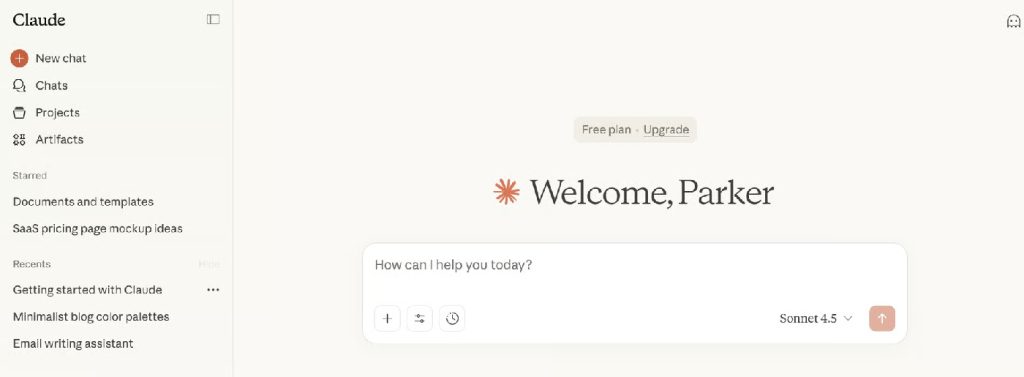
Managing a business website involves much more than publishing new pages. Website owners regularly update product information, write blog posts, create landing pages, answer customer questions, and maintain supporting documentation. Many of these tasks require careful writing and organization, making them well suited for AI-assisted workflows.

Claude AI can help draft website copy, prepare product descriptions, organize FAQ pages, and support a broader content strategy by generating ideas for blogs, landing pages, and other website content. It is also useful for brainstorming page structures, creating technical documentation, and preparing customer support content that aligns with a company’s tone of voice.
While AI can accelerate content creation, every draft should still be reviewed before publication. Businesses that combine AI-generated content with human editing are better positioned to maintain accuracy, consistency, and brand identity across their websites.
Combining AI with a Modern Website Platform
AI delivers the greatest value when it becomes part of a broader website management workflow rather than a standalone tool. Claude AI can help generate ideas, draft content, summarize research, and organize information, but publishing and maintaining that content still requires a reliable content management system.
For example, a business might use Claude AI to create a product description, rewrite a landing page, or prepare a series of blog articles. After reviewing and refining the content, it can be published through a CMS, where teams manage pages, update media, and maintain the overall website structure. Analytics tools then measure visitor engagement, helping businesses identify which pages perform well and where content can be improved. As AI-powered search experiences become more common, businesses should also consider AI search visibility when creating and updating website content.
This combination of AI, a modern website platform, and ongoing performance analysis creates a practical workflow that supports continuous website growth. AI helps speed up content production, while the CMS and analytics provide the control and insights needed to keep the website accurate, relevant, and effective over time.
Best Practices for Achieving Better AI Results
The quality of AI output depends heavily on how users interact with the system. Clear instructions, sufficient context, and well-defined objectives produce significantly better responses than vague or incomplete prompts.
Professionals achieve stronger outcomes by breaking larger projects into smaller tasks and providing relevant background information. Specifying the desired audience, format, tone, and expected level of detail also helps Claude generate more accurate and useful content.
Reviewing AI-generated work remains an essential part of every workflow. This is particularly important for website content, where accuracy, originality, and a consistent brand voice directly affect user trust and search performance. While Claude demonstrates impressive reasoning capabilities, human oversight ensures factual accuracy, consistency with business goals, and alignment with organizational standards.
Organizations that establish prompt libraries, documentation standards, and internal AI guidelines often experience greater consistency across teams. These practices reduce learning curves while helping employees develop repeatable processes that improve productivity over time.
The Growing Role of Responsible AI Adoption
As AI becomes integrated into daily operations, organizations are placing greater emphasis on responsible implementation. Data privacy, transparency, governance, and quality control are becoming essential considerations rather than optional best practices.
Businesses should establish clear policies regarding sensitive information, confidential documents, and compliance requirements before incorporating AI into critical workflows. Employees also benefit from training that explains when AI should assist decision-making rather than replace human judgment.
Responsible adoption encourages trust among employees, customers, and stakeholders. Companies that combine technological innovation with thoughtful governance are better positioned to realize long-term value while minimizing operational risks.
This balanced approach allows organizations to confidently expand AI usage across departments without compromising quality, security, or accountability.
Looking Ahead: AI as a Long-Term Competitive Advantage
For businesses managing modern websites, AI works best alongside a reliable CMS, thoughtful content strategy, and regular website updates. Claude AI can accelerate content creation and research, while website platforms provide the tools needed to publish, manage, and continually improve the online experience. Used together, AI and a modern CMS help businesses create content more efficiently while maintaining quality, consistency, and long-term website performance.