
When a Missed Call Costs More Than You Think
A while back, I was managing client operations for a logistics startup that lived or died by inbound calls. We handled everything from vendor scheduling to new business quotes, and even a single missed call could mean lost revenue.
One prospect left a detailed voicemail asking for a rush quote, then called again the next morning. By the time we called back, they’d gone with a competitor. When I looked at the potential deal size, I realized that one missed connection had cost us most of our quarterly marketing budget.
That moment changed how I thought about call management. Responsiveness wasn’t an admin task; it was a competitive advantage. We didn’t need to hire more receptionists; we needed smarter systems that could engage callers instantly, qualify leads, and sync with the tools we already used.
That’s where modern AI answering services earn their keep: they make sure every call is captured, processed, and acted on without slowing your team down.
Top Three Quick Picks: Best AI Answering Services in 2025
Rosie AI: Best for Human-Sounding Call Handling
- Converts leads, not just records them
- Syncs with CRMs and calendars
- Built for lean, fast-moving teams
Conversica: Best for Automated Lead Engagement
- AI follow-up via voice, SMS, and email
- Qualifies leads without manual effort
- Ideal for inbound sales workflows
Air AI: Best for Long, Natural Conversations
- Handles complex, multi-turn calls
- Realistic, human-like voice delivery
- Great for high-ticket client interactions
Each platform brings a different advantage. Before you choose, it’s worth understanding what really separates a beneficial AI answering service from one that just picks up the phone.
Five Questions to Ask Before You Choose an AI Answering Partner
Does It Sound Like Someone You’d Actually Hire?
Voice realism is the most critical factor in customer trust. If the AI’s tone feels flat, synthetic, or too scripted, callers will hesitate, and in some industries, that hesitation costs business. Modern models like Rosie AI use adaptive speech synthesis, allowing the voice to adjust pace, tone, and inflection in real time.
That means it can handle interruptions naturally and continue a conversation without sounding preprogrammed. Always ask for call samples or test environments before signing a contract. If you wouldn’t let that “voice” represent your brand on a live call, it’s not ready for production.
Will It Fit Smoothly Into Your Workflow?
The best AI receptionist isn’t just another tool; it’s part of your operational backbone. Look for systems that automatically sync call summaries, transcripts, and scheduling data into your CRM and calendars, such as HubSpot, Salesforce, or Google Workspace.
A good setup should trigger workflows automatically: logging calls as tasks, updating client records, and even sending follow-up reminders. Without that, you’re simply moving the manual work downstream. Integrations aren’t optional; they’re what separate a time-saver from a data silo.
Can It Balance Automation With Human Judgment?
Pure AI can handle volume efficiently, but judgment still matters. A legal intake call, for example, might sound routine until someone mentions an urgent filing deadline or sensitive issue. That’s where hybrid systems shine. They let AI field initial questions, then escalate calls to human agents when nuance or empathy is required.
This structure prevents important leads from being mishandled while still freeing your team from routine calls. Evaluate how easily your provider supports escalation, whether to your internal staff or a live receptionist partner.
Is “24/7” Coverage Actually 24/7?
Many platforms advertise 24/7 coverage, but what that means varies widely. Some simply record messages after hours and send a transcript later. True coverage means a real-time response at any hour, with AI or hybrid staff capable of routing urgent calls immediately.
This distinction matters most for service businesses, healthcare providers, and any company operating across time zones. Before committing, test after-hours calls and see what happens. You’ll learn quickly if “always on” really means always available.
How Secure Is the Call Data?
Every call holds sensitive data, names, payment details, health information, or internal schedules. Security and compliance should never be an afterthought. Ensure the provider uses end-to-end encryption, offers role-based data access, and complies with regulations like HIPAA, GDPR, or PCI DSS, depending on your industry.
Ask where recordings and transcripts are stored and who can access them. A credible provider should be transparent about its data retention and deletion policies. Treat this as you would any other SaaS vendor audit, because a privacy lapse on their end becomes a liability on yours.
The 8 Best AI Answering Services of 2025
The AI answering market has matured quickly. What used to be basic voicemail automation has evolved into intelligent voice systems that understand intent, book appointments, and integrate directly with your tech stack. Below are eight standout options worth your attention this year, each addressing different operational needs. From human-sounding reception to lead conversion, compliance, and hybrid support models.
1. Rosie AI: Best for Human-Sounding Call Handling

- Founded: 2024
- Headquarters: Remote
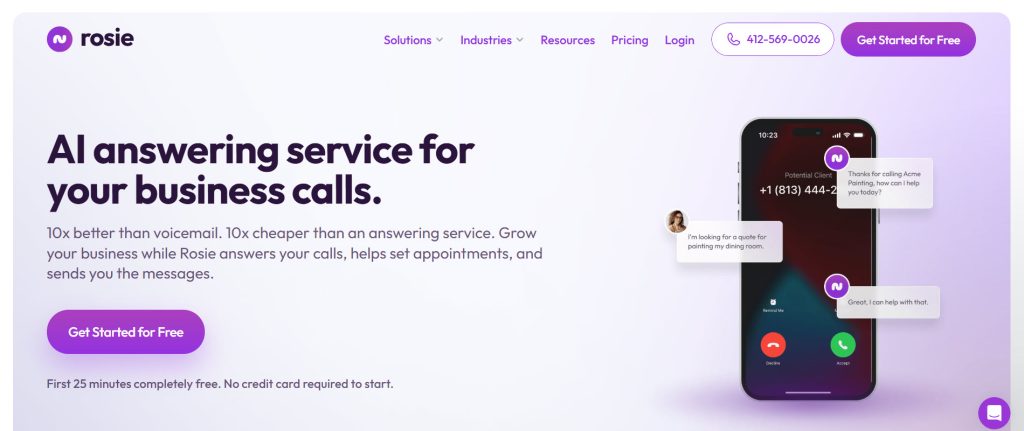
Why Rosie AI is the best AI answering service: This tool is designed for businesses that can’t afford to miss a call but don’t want to staff a full reception team. Its conversational AI delivers lifelike, natural speech that adjusts tone, pacing, and inflection mid-conversation.
Rosie AI doesn’t just log messages; it books appointments, syncs with calendars and CRMs, and delivers actionable call summaries in real time. With native integrations for HubSpot, Salesforce, and Google Workspace, it gives small and mid-sized teams enterprise-level responsiveness without added headcount.
The platform is built around usability, offering clear setup flows and custom scripts that let companies match their brand tone effortlessly.
2. Conversica: Best for Automated Lead Engagement

- Founded: 2007
- Headquarters: San Mateo, CA
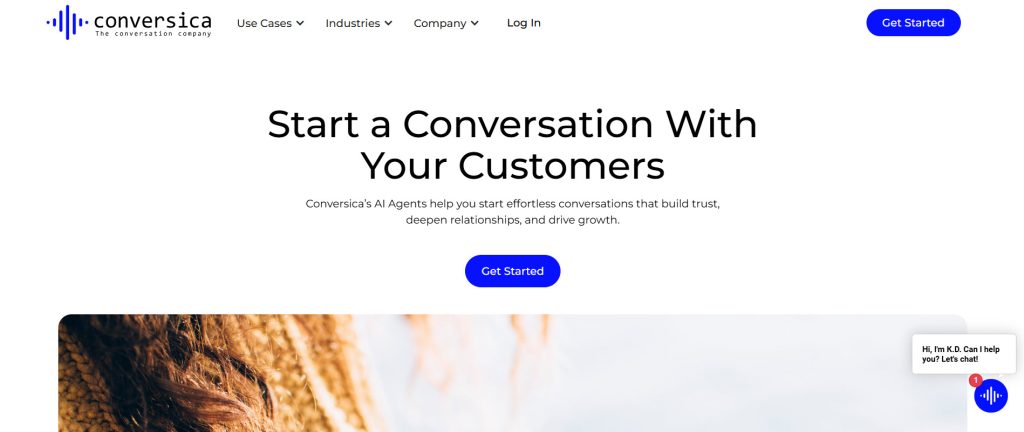
Conversica specializes in lead follow-up and qualification through conversational AI. Its assistants engage inbound leads across phone, email, and SMS, using natural dialogue to nurture prospects and schedule appointments.
Rather than relying on static scripts, Conversica adapts based on intent and prior interactions, ensuring every outreach feels timely and relevant. It’s especially effective for sales-driven organizations (SaaS, automotive, and B2B services), where speed and persistence determine conversion.
It connects seamlessly with CRMs like Salesforce, HubSpot, and Zoho, ensuring leads move automatically from inquiry to qualified status without manual intervention.
3. Air AI: Best for Long, Natural Conversations

- Founded: 2023
- Headquarters: Miami, FL
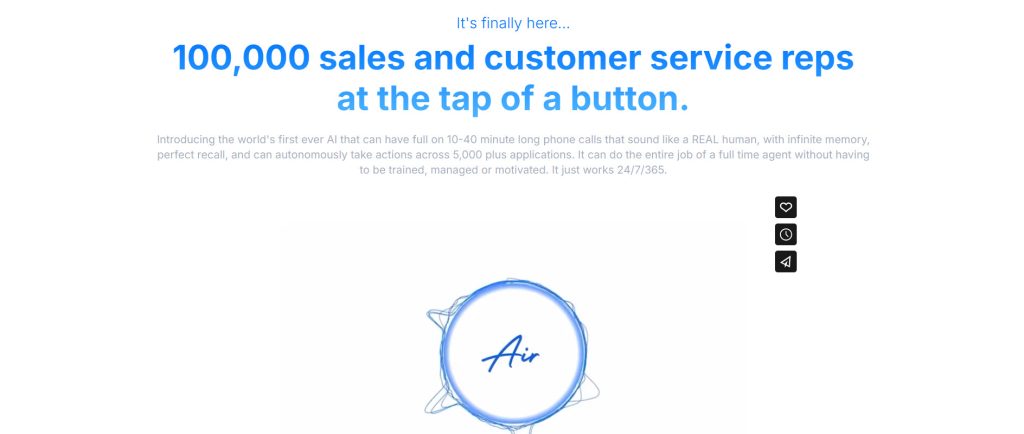
Air AI is built to handle complex, multi-turn conversations that go beyond basic scheduling or intake. Its synthetic voice is remarkably realistic, capable of managing nuanced exchanges and context over several minutes, something most AI agents struggle with. It can book appointments, qualify leads, and record contextual insights directly into your CRM. Air AI is particularly strong for industries with high-value or detailed calls, such as real estate, law, or healthcare. With conversation analytics and real-time reporting, it also provides a layer of transparency rarely found in conversational AI.
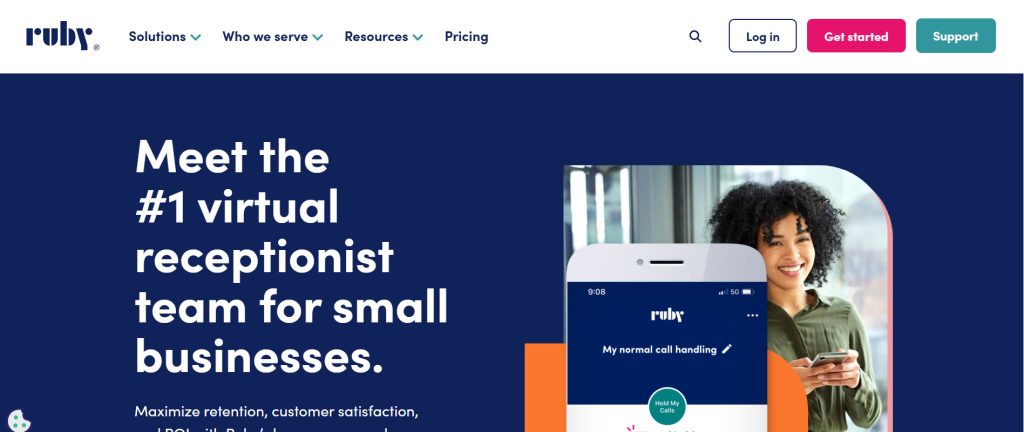
4. Ruby: Best for Brand-Consistent Live Answering
- Founded: 2003
- Headquarters: Portland, OR
Ruby combines U.S.-based live receptionists with automation support for companies that want a premium, consistent front-line experience. While not fully AI-driven, Ruby leverages AI tools to pre-screen calls, transcribe conversations, and assist agents with faster routing. The result is a polished, human-first experience supported by intelligent automation behind the scenes. For law firms, marketing agencies, and consultancies where brand tone and professionalism matter, Ruby provides a dependable middle ground between high-touch human service and AI efficiency.
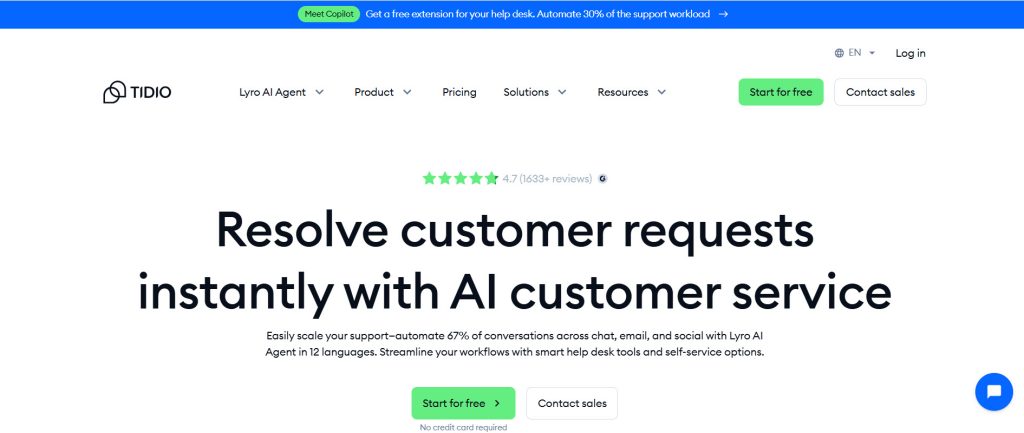
5. Tidio: Best for E-Commerce Voice + Chat

- Founded: 2013
- Headquarters: San Francisco, CA
Tidio started as a chat solution for Shopify stores, but its voice automation features have made it a strong contender for online businesses. The platform connects voice, chat, and social messaging into a single interface, using AI to handle customer FAQs, product questions, and post-purchase support. It can route calls, track orders, and answer inquiries automatically, freeing up e-commerce teams to focus on fulfillment and strategy. For small retailers or DTC brands, it’s an accessible way to add live-like responsiveness without expanding headcount.
6. Numa: Best for Multi-Channel Local Support

- Founded: 2016
- Headquarters: Oakland, CA
Numa bridges the gap between phone and text communication for local service businesses. When a customer calls and can’t get through, Numa answers with AI and continues the conversation via SMS, keeping the dialogue going without requiring a live rep. It’s ideal for clinics, repair shops, or small offices that deal with fluctuating call volumes. Numa also integrates with messaging platforms and CRMs, allowing teams to manage all communications from a single dashboard.
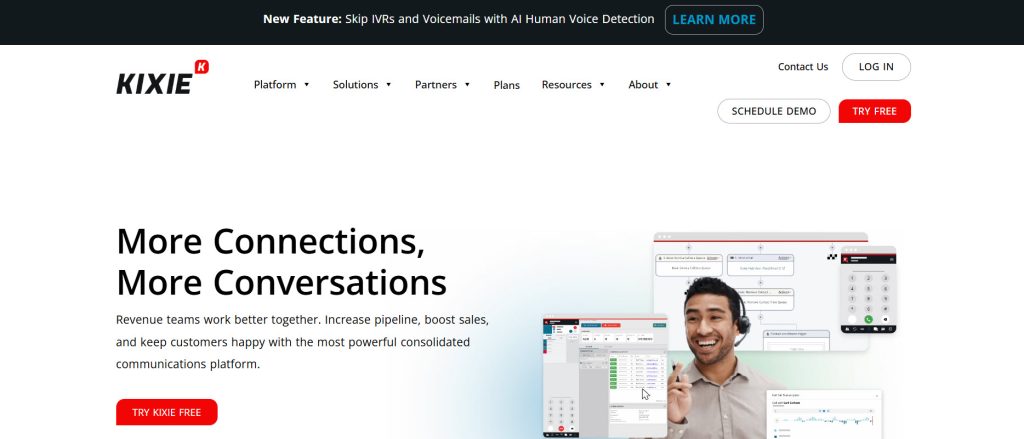
7. Kixie: Best for Voice Sales Automation

- Founded: 2013
- Headquarters: Santa Monica, CA
Kixie is built for sales teams that want to automate outbound and inbound workflows. Its AI-powered features include power dialing, voicemail drops, real-time coaching prompts, and automatic CRM updates. While it’s not a receptionist replacement, Kixie gives sales reps the tools to handle higher call volumes without losing personalization. It’s particularly useful for teams that rely on consistent outreach and want to monitor call effectiveness through integrated analytics.
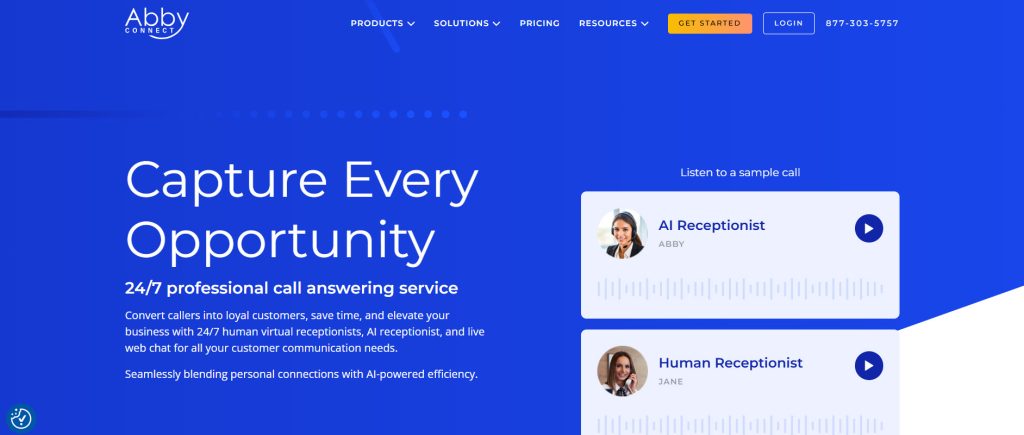
8. Abby Connect: Best for Hybrid AI + Human Support

- Founded: 2005
- Headquarters: Las Vegas, NV
Abby Connect combines AI-powered intake with live U.S.-based receptionists to deliver coverage across industries and time zones. AI handles initial screening and routing, while trained agents manage more complex or sensitive interactions. This balance allows businesses to maintain human warmth where it matters most while leveraging automation for efficiency. Abby Connect also supports custom call scripts, bilingual options, and integrations with most major CRMs, making it a strong hybrid choice for firms that want flexibility without sacrificing professionalism.
Why Smarter Reception Is the Next Competitive Edge
The fundamental shift happening in customer communication isn’t about replacing people; it’s about amplifying their reach. AI answering tools give small teams the responsiveness of enterprise operations, ensuring every call gets handled, logged, and followed up on. Rosie AI leads this evolution by combining realism, integration depth, and adaptability in one seamless platform. Others, like Conversica, Air AI, and Abby Connect, show how automation can align with real human priorities: time, trust, and connection.